[00:00:00] Pete Waggoner, Host
Hi there, and welcome to Beyond the Checkup, brought to you by Stellis Health, where neighbors care for neighbors. I’m your host, Pete Waggoner. If you’ve ever wondered whether you’re making enough milk, worried about mastitis, or felt pressure to build a freezer full of breast milk, you’re not alone. Today, Dr. Lindsey Latteman joins us to separate breastfeeding myths from evidence-based advice and share what every new parent should know. Welcome.
[00:00:25] Lindsey Latteman, MD
Good morning. Thanks for having me.
[00:00:26] Pete Waggoner, Host
It’s great to be with you. Thank you. Let’s get started here. So you had mentioned this is a topic of passion for you. Can you explain that a little bit?
[00:00:33] Lindsey Latteman, MD
I am an OB/GYN, and I see a lot of pregnant and postpartum patients. And in addition to that, I just recently had my second child in January, and through my own breastfeeding journey, I struggled a lot with production and so went into a deep dive of learning more about lactation medicine and breastfeeding support so that I could better help my own patients in addition to helping myself. I am in the process of completing the educational material and lecture-based learning as well as clinical experience to become board certified in breastfeeding and lactation medicine. This is a new board certification area, but it has really become more popular among patients who see mothers and babies, and it’s a way to not only offer lactation support to patients, but also to provide medical support in the form of lactation medicine and understanding what happens with breastfeeding and lactation. It also means that we can help diagnose patients who might be struggling with production, or also if they have complications of lactation, like mastitis and so for me, this is a really personal interest that has also allowed me to help a lot of other patients too. In doing that, I also have learned a lot more about just the balance of production for patients, and that while I struggled with production, many patients end up having too much production and that in its own way is actually very harmful.
[00:01:53] Pete Waggoner, Host
We’ll get into that. That’s fascinating to hear. So congratulations on baby number two.
[00:01:57] Lindsey Latteman, MD
Thank you.
[00:01:58] Pete Waggoner, Host
This is both personal and professional, which is really great. There’s a strong passion for this topic, and I’m looking forward to diving in. Everyone has heard of mastitis, but what is it?
[00:02:12] Lindsey Latteman, MD
Mastitis is a condition of warmth and redness and irritation and inflammation of the breast tissue, and most commonly happens during lactation, so when people are breastfeeding or producing milk for an infant. But the tissue becomes inflamed. The skin often becomes red, and it feels warm to the touch, and it’s very tender. Sometimes as it gets further along, people become almost systemically sick. So they feel like they have the flu. They feel kind of crummy. They have a fever. They feel nauseous or have low energy. And if it goes on beyond that, it can continue to become an infection or even an abscess. So it runs the gamut, but it starts out with mostly just inflammation.
[00:02:54] Pete Waggoner, Host
So does that inflammation go from being, I don’t wanna say basic pain or discomfort, does that kinda ramp up as it extends?
[00:03:02] Lindsey Latteman, MD
Yes. It can ramp up in intensity, but also just the other symptoms that people have also ramp up, especially things like fevers and chills and feeling like you have the flu.
[00:03:12] Pete Waggoner, Host
Recommendations changed significantly in 2022. As far as advice is concerned, what would you say has changed from four years ago to now even?
[00:03:24] Lindsey Latteman, MD
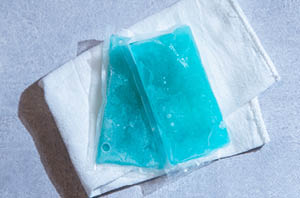
Yeah. So the biggest thing is that before the most recent recommendations from the Academy of Breastfeeding Medicine that were published in 2022, before those guidelines, we sort of assumed that it was related to sort of a physical clogging of the ducts in the breast causing a backup of milk that caused inflammation and then led to infection. And so the treatments that we used to recommend and the things that we recommended for patients to do for their own care at home involved things that we thought would help loosen and, like, release milk from the breast. That kind of involved things like applying heat and applying massage to move the milk out, and intuitively people sort of thought that made sense. But when we dove more into the science of how the breasts work and how the ducts work when you learn more about the way that the milk is produced in the small glands of the breast and where it goes when it’s backed up or when there is inflammation we know that actually that inflammation in the breast is causing actually a narrowing of the ducts. And so when we see that, the milk is unable to escape. And so that means that really the treatment we were prescribing all this time was wrong. And it was actually a really big sea change. A lot of providers had a hard time kind of wrapping their mind around, like, you don’t automatically need antibiotics. You can start by treating the inflammation with ice, resting the breast, feeding normally at the breast but not excessively, and avoiding excessive pumping.
[00:04:50] Pete Waggoner, Host
What do you think the catalyst was? You know, because sometimes it’s easy to say, “Well, this is what we do. This is how we’ve done it.” Was there some buildup or moments to saying, “You know, we gotta reexamine this”?
[00:05:02] Lindsey Latteman, MD
I think it was just realizing that a lot of people weren’t getting better with conservative things and that we were prescribing a lot of antibiotics when it seemed like in other countries especially in European countries, there was a tendency more to start with conservative management with just ice and ibuprofen or similar- Mm-hmm medicines, and that seemed to avoid people needing to have antibiotics if it was caught early enough. And so on the US side and on the Academy of Breastfeeding Medicine side as we developed a better understanding of that, it led us to knowing that we needed newer guidelines.
[00:05:34] Pete Waggoner, Host
I think everybody’s heard about the phrase clogged duct. I know I have. So what actually is happening in that part of this process?
[00:05:44] Lindsey Latteman, MD
When people hear the term ‘clogged duct,’ they often picture a cork sitting in the duct with thick milk behind it that is not being expressed. full of like thick milk that’s not being expressed. But really what is happening is that when your breasts are over full, the milk from the small glands kind of leaks into the tissue a little bit. That causes your body to have an inflammatory reaction, and that inflammation causes swelling in the tissue, and the swelling kind of closes off the actual duct. Because the duct is flexible, it is like a soft garden hose. When inflammation pushes in on all sides of the duct, the milk cannot leave, and that is what causes the clog.
[00:06:28] Pete Waggoner, Host
So it’s not the plug, as we were talking about. It’s not a plug. Would you give that a different term? Like, if you were to change perception, would you change it, and what would it be?
[00:06:36] Lindsey Latteman, MD
Maybe duct narrowing, duct obstruction, or duct constriction. Even duct obstruction is not a perfect term.
[00:06:42] Pete Waggoner, Host
So it is a narrowing process rather than a plug. A plug. Okay.
[00:06:45] Lindsey Latteman, MD
Or duct constriction maybe. So.
[00:06:46] Pete Waggoner, Host
Okay, there we go. Yeah. So, one of the biggest trends online, we’ve heard about and seen, the freezer stashes.
[00:06:54] Lindsey Latteman, MD
Yes.
[00:06:54] Pete Waggoner, Host
What is that, and is it actually healthy? Is it a good thing? What’s happening there?
[00:06:59] Lindsey Latteman, MD
I don’t wanna say that it’s not healthy, but I think it is something that sometimes people become a little bit more obsessed about especially under the influence of social media. And we all know that social media can drive us to do things that we wouldn’t normally do just because it seems like everyone else is doing it. And that it seems like once you start to see presentations of that, that’s how everyone is experiencing lactation. But when we’re talking about breast milk production, your body is sort of like a factory that’s producing the breast milk. And so ideally you don’t need to store a lot of milk. You want the baby to eat what you’re making, and then occasionally or when patients are getting ready to go back to work, you need just enough for the baby to get through the next day during your workday. But you shouldn’t need a ton more than that really to have on hand at home.
[00:07:48] Pete Waggoner, Host
If you’re freezing something, to me that always lends to a defrosting process.
[00:07:55] Lindsey Latteman, MD
Yes.
[00:07:56] Pete Waggoner, Host
And then a more, a difficult, I would say, reheating or warming process.
[00:08:02] Lindsey Latteman, MD
Yeah.
[00:08:03] Pete Waggoner, Host
Does that add in any kind of dynamics at all to everything?
[00:08:07] Lindsey Latteman, MD
It is true that you get a small degradation of the quality of the breast milk- Mm-hmm in terms of some of the best benefits in terms of the infection fighting cells and some of the proteins and some of the enzymes and things that are in breast milk. Over time they just degrade in the freezer in the way that frozen food degrades and in theory we should all be throwing out things in our freezer that have been in there for more than three or six months, which I’m sure we’re all guilty of not doing.
[00:08:32] Pete Waggoner, Host
But- Okay. Well, yeah, I guess I better go do it now when I go home. Yeah. Right. Exactly. When you try to do this oversupply in the freezer stash,, can you increase the instances of mastitis?
[00:08:42] Lindsey Latteman, MD
Absolutely. That’s probably one of the biggest risks of having an overproduction, especially if it’s excessive enough that you’re freezing multiple ounces a day. 10 or 20 ounces a day on top of what your baby is taking in. That means that you’re essentially producing enough milk for twins. And when you are doing that, your breasts are producing all of this milk and there’s no place for it to go, and that means that you have a lot of that leakage of the lactose and the milk into the tissue, a lot of inflammation. And because it’s a little bit of a supply and demand situation, the more that you pump or try to empty the breast, the bigger the signal to the brain that says, “The factory is not keeping up with demand. We have to make more.” And so it becomes a vicious circle. The more that you pump and try to fully empty the breast, the more the the brain wants you to produce more milk.
[00:09:29] Pete Waggoner, Host
How do you best suggest to manage that factory production?
[00:09:32] Lindsey Latteman, MD
Yeah. The best thing is actually to become comfortable with the sensation of a small amount of milk being left over. And so knowing that it will still feel a little bit full if you’re trying to decrease your production actively. And so there are ways to kinda manage that in terms of wearing a supportive bra knowing that you might need some ice or ibuprofen if it’s uncomfortable and focusing on feeding the baby just as much as the baby wants. Sometimes avoiding pumping and just feeding the baby at the breast or just pumping what the baby will feed at a time is a way to down regulate as well. There’s more in depth ways to do that, but it’s usually best guided by someone who is trained in lactation.
[00:10:11] Pete Waggoner, Host
What about the advice you’ve heard from probably pre-2022, massage the lump until it disappears? Is that recommended?
[00:10:18] Lindsey Latteman, MD
No, absolutely not. So if you think about the clusters of glands in the breast, it’s a, it’s a really complicated tree or a complicated cluster of grapes. Every little tiny gland is like a little grape along a stem, and the stems are the ducts that kind of join together and become the exit for the milk. And if you were to massage a bag full of grapes really firmly trying to get the juice of the grapes out, you would just get juice everywhere in the bag, and it wouldn’t really go anywhere
[00:10:44] Pete Waggoner, Host
That may be one of the best metaphors I’ve heard on this podcast.
[00:10:47] Lindsey Latteman, MD
I cannot take credit for it. My mentors have many of those metaphors in their pockets.
[00:10:49] Pete Waggoner, Host
We will credit your mentors. That was really helpful. So firm massage is not recommended. We will credit your mentors. That was really helpful. So firm massage is not recommended.
[00:10:50] Lindsey Latteman, MD
of those
[00:10:50] Pete Waggoner, Host
in their pockets and my- So copyright the mentors. Yeah. No, but that was really good. So really massaging, it’s a bad move.
[00:10:56] Lindsey Latteman, MD
You probably want to massage it because it feels tender.
[00:10:56] Pete Waggoner, Host
You probably want to massage it because it feels tender.
[00:11:00] Lindsey Latteman, MD
Yes. It can feel good in the moment because it is tender, and you may feel like you need to keep touching it to locate the tender area.
[00:11:01] Pete Waggoner, Host
Because it would be
[00:11:01] Lindsey Latteman, MD
a reaction feels good in the moment because it’s tender, and you sort of feel like you need to feel it to know where it is, or you’re worried about, like, where is it tender. The tendency is to keep touching it, much like people pick at scabs, but in the end it can be detrimental.
[00:11:18] Pete Waggoner, Host
Got it. If someone notices breast pain, tenderness, that type of thing, in the first 24 hours, what’s the best course of action for that person?
[00:11:26] Lindsey Latteman, MD
Yeah. If you’re at home and you’re feeding your baby and you realize that you’re, you have an area of your breast that’s really tender or warm or starting to be painful, the first thing is to use some ice to cool the area down and to try to minimize any trauma to the breast. So avoiding pumping if you can. If you’re someone who’s feeding directly at the breast, feeding only the baby on that side and not doing a ton of pumping and not focusing on completely emptying the breast is a good start. Then you can also add ibuprofen for symptom relief but the ice really helps a lot with inflammation.
[00:11:59] Pete Waggoner, Host
Ice is always a good thing no matter what, I swear, right? What symptoms should mothers never ignore?
[00:12:07] Lindsey Latteman, MD
Great question. So if you’re doing these things at home because you have an area that’s tender, but it’s getting more red or more painful or if it’s becoming more swollen or if it feels like a water balloon when you push on a specific area, like there might be a pocket of fluid there, all of those are signs that you may have an abscess or worsening infection, and you should be seen. Especially if things don’t get better within about 24 hours of things that you can do at home, then you should absolutely be seen in clinic. And the reason we like to see you in person if at all possible is so that we can examine your breast too and decide if you need things like an ultrasound to determine if there’s an abscess, because abscesses need to be drained in order to heal, or also to make sure that there are no signs of streaking of red from the area of warmth and redness. If there are streaks traveling outward, that indicates that there may be a bacterial infection, and then that is the time that we would treat with antibiotics.
[00:12:57] Pete Waggoner, Host
So within this realm of symptoms and patients that you see, how frequent is this?
[00:13:04] Lindsey Latteman, MD
It comes and goes in waves in my practice. I would say it is not uncommon for people to experience mastitis at least once during their breastfeeding journey. But I would say a little bit more because of the influence of the desire to have a freezer stash. Sometimes we also see it when babies start to eat solids and they’re removing less milk from the breast because then patients have to experience a downregulation in their milk production. And while that is happening, there’s a risk for kind of that overproduction to still cause the inflammation.
[00:13:36] Pete Waggoner, Host
Makes complete sense to me. What other breastfeeding myths are you correcting on a daily to weekly basis? I’m sure you’re dealing with it a lot.
[00:13:47] Lindsey Latteman, MD
Yeah. I think especially, and this is one thing that kind of drives up overproduction, is that often patients think even from the beginning of their breastfeeding journey that they need to pump after the baby feeds in order to increase their production and drive up that supply. And doing that, especially in the first couple weeks postpartum, can really set the tone and really sets the, like, biochemical response in the brain and really can drive up that production very high and set them up for a kind of a track of overproduction for the rest of their breastfeeding journey.
[00:14:19] Pete Waggoner, Host
I would think with what you do, no matter what the situation, there are some people that may say, “Yeah, but…” Or they still think, you know, they’ll go freelance off the rails a little bit.
[00:14:31] Lindsey Latteman, MD
Yeah.
[00:14:31] Pete Waggoner, Host
But if you were to say to anybody, any mom leaving the hospital, just to remember one thing about breastfeeding beyond what you think the yeah, buts are, what would that be?
[00:14:42] Lindsey Latteman, MD
Ideally, you produce in a day what your baby takes in that day. Anything extra that you make from that might be a small amount to put in the freezer, but it’s not necessary. Your goal should be to feed the baby and provide what you are able to produce. And so an ideal situation is actually for your production to match what the baby needs. And your body will naturally do that. As the baby’s eating more in the first couple weeks, your production increases. And then at six months when babies start to eat solids, production often dips down a little bit because they’re naturally taking in less milk.
[00:15:16] Pete Waggoner, Host
If you’re to look back on your journey as a mother and then as a doctor, what is your biggest takeaway with what you’ve learned over the last, let’s say, four years of this, if you were to summarize that through both lenses?
[00:15:32] Lindsey Latteman, MD
I think the biggest thing that I’ve taken away as a provider and as a physician is just that we need to do a better job of educating patients and being prepared for lactation. And so I try to focus on any concerns that patients have antepartum, so before they deliver and thinking a little bit more beyond just automatically giving everyone a breast pump. Certainly everyone’s insurance will pay for a breast pump in most pregnancies, or, at least I think usually it’s every two years or so. So if you’ve recently had one, you obviously don’t usually need another one right away. But for most patients, the goal should be to build that bond with mother and baby, and to help everyone have a physiologic or a normal breastfeeding relationship where they can feed at the breast if possible and if that’s important to them. It’s definitely true that some patients are worried about when they go back to work, and sometimes they may not have a situation at work where they can easily pump to maintain their supply. And for those patients, they’re often worried about building a freezer stash, and that’s understandable. I think that’s a source of anxiety for some patients. But I think managing that in a way that helps prevent them from getting into a, a realm of too much production that puts their health at risk is a nuanced discussion for sure.
[00:16:38] Pete Waggoner, Host
Do you have a bit of a roadmap that you provide?
[00:16:40] Lindsey Latteman, MD
Yeah. I usually try to ask patients about what their their goal with breastfeeding goals are. Are they hoping to feed exclusively breast milk? Are they wanting to feed as much as they can breast milk, but are comfortable with supplementing if needed? Do they want to feed until they go back to work, or are they wanting to feed for an entire year or longer? And all those scenarios have different ways to achieve that depending on the patient’s physiology also.
[00:17:05] Pete Waggoner, Host
That is great information. Thank you so much for joining us. This was fascinating. I learn something new every time, and I hope our listeners did too. That is a wrap for today’s episode of Beyond the Checkup, brought to you by Stellis Health, where neighbors care for neighbors. If this conversation helped answer a question you have had or eased a worry, think of another parent, parent-to-be, or caregiver who could benefit from hearing it too. Thanks for listening, and we will see you next time.