
For years, knee replacement had a reputation.
Painful recovery. Weeks of rehab. Walkers, narcotics, and putting your life on hold.
That reputation kept a lot of people waiting far longer than they wanted to.
But what if recovery looked completely different?
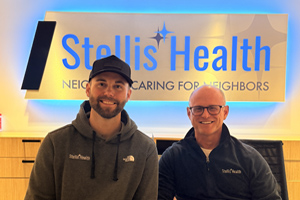
In this episode of Beyond the Checkup, orthopedic physician assistants Brian Yost, PA-C and Jake Berwyn, PA-C explain how the new Jiffy Knee procedure is changing the way patients experience knee replacement surgery.
Instead of cutting through tendons and muscles, this approach works by carefully moving tissues aside, helping patients recover faster with less pain and less downtime. Many patients are walking without a cane or walker within days, and most are recovering without narcotic pain medication.
The results have been so significant that patients are already traveling from across Minnesota and neighboring states to have the procedure done at Stellis Health.
This episode breaks down how Jiffy Knee works, who it is for, and why so many people are saying they wish they had done it sooner.
What You Will Learn
- How Jiffy Knee differs from traditional knee replacement
- Why patients are recovering faster with less pain
- What makes this procedure minimally invasive
- Who may benefit from the surgery
- What recovery really looks like after surgery
- Why some patients no longer need rehab stays or narcotics
- How physical therapy has changed with this approach
Episode Highlights
[00:00:40] How the team discovered the Jiffy Knee procedure
[00:01:43] Why this approach creates less pain and faster recovery
[00:02:59] The biggest difference between traditional knee replacement and Jiffy Knee
[00:04:38] Why staff and patients were immediately impressed with recovery
[00:05:13] Who is the ideal candidate for Jiffy Knee
[00:06:25] How timelines compare to traditional knee replacement recovery
[00:07:43] Why patients are saying, “I wish I had done this years ago”
[00:08:31] Patients traveling across multiple states for the procedure
[00:09:26] The biggest fears patients have before knee replacement
[00:14:03] Real patient feedback and “night and day” recovery stories
[00:16:23] The biggest myth about knee replacement surgery
[00:20:16] How patients can start the process and learn more
Resources Mentioned
Memorable Quotes
“It’s amazing how much less painful this is for patients.”
“We’re seeing 80-year-olds walking without a cane a few days later.”
“Most of our patients are not using narcotics at all.”
“People are saying, ‘I wish I had done this years ago.’”
“Knee replacement used to be the most painful surgery. Now it’s one of the easier recoveries we see.”
Listen to the latest episodes on:
Transcripts
[00:00:00] Pete Waggoner, Host: Hi there, and welcome to Beyond the Checkup, brought to you by Stellis Health, where neighbors care for neighbors. I’m your host, Pete Wagner, and if knee pain has been slowing you down or you’ve been putting off surgery because of the recovery, this episode is for you.
[00:00:13] Pete Waggoner, Host: Today we’re talking about a newer approach to knee replacement called Jiffy Knee, and how it’s helping patients get back on their feet faster. Let’s dive right in. We’ve got Brian Yost, Jake Berwyn, both PAs here at Stellis Health, doctors, great to see you here today. Thank you.
[00:00:28] Brian Yost, PA-C, Orthopedics: Thank you. Thanks for having us.
[00:00:29] Pete Waggoner, Host: What a cool concept here. How did you get introduced Jiffy Knee and did you as well, Jake? Or did you just follow suit here?
[00:00:36] Jake Berwyn, PA-C, Orthopedics: I’ve been learning from Dr. Jahanjee and Brian.
[00:00:39] Pete Waggoner, Host: Tell us about that.
[00:00:40] Brian Yost, PA-C, Orthopedics: Yeah. There’s a Dr. Patel out in Norfolk, Virginia, who’s been doing this method for 20-some years, and about eight years ago he patented it and decided to start training people And we found out about it through the companies we use for our knee replacement. And we went out there and he said, “Yeah, come out and bring one of your PAs.”
[00:00:57] Brian Yost, PA-C, Orthopedics: And, we learned this method from him, and [00:01:00] it’s amazing. It’s so much less painful and easier for patients than the standard knee replacement.
[00:01:05] Pete Waggoner, Host: So with less pain and those things involved, what was the impetus though for him? Was he looking at this and saying, “There’s gotta be a better way,” or what really was the driver for him?
[00:01:14] Brian Yost, PA-C, Orthopedics: Yeah Dr. Jahanjee, he’s not your standard orthopedic physician. He, you know, some docs kind of specialize in either sports medicine or joints. Jahanjee, he does the gamut. He’s a, your old school general orthopedist, and he’s always interested in like new ways of doing different types of surgeries. And we have seen things change with different ways to do different surgeries over the years.
[00:01:35] Brian Yost, PA-C, Orthopedics: But knees had not really changed, and when he got a hint of this, he said, “I at least need to check this out.” And it turned out to be a wonderful thing.
[00:01:43] Pete Waggoner, Host: Jake, we’ll go to you on that. You probably haven’t been in the business for decades, right? You learned one way and suddenly you see this new way, so you’re pretty fresh in on that. When you saw it, what was your approach? I mean, mentally were you like, “Oh, this is cool. I can grasp this pretty quickly”?
[00:01:56] Jake Berwyn, PA-C, Orthopedics: Yeah, definitely. I’ve been in orthopedics about five years, so [00:02:00] not quite as long as Dr.
[00:02:01] Jake Berwyn, PA-C, Orthopedics: Jahanjee and Brian. But been learning a lot. And when I first started doing knee replacements with Dr. Janji, it’s a great surgery, it’s a great way to do it, it’s pretty intense obviously. You know, you’re opening up the knee joint and there’s a lot going into it.
[00:02:14] Jake Berwyn, PA-C, Orthopedics: So then when they started talking about this new way where you’re not cutting the tendons, not cutting the muscles, you’re just moving everything out of the way, it was like, “Is that seems a little too good to be true.” So I’m like I’ll see how it looks when I actually get in there.” But it’s been amazing.
[00:02:26] Jake Berwyn, PA-C, Orthopedics: You get just as good of exposure you’re not harming the tendons and muscles and it’s really impressive. And the recoveries are just speaking for themselves. We’re seeing 80-year-old people walking without a cane or a walker a few days after. It’s just been incredible to see.
[00:02:40] Jake Berwyn, PA-C, Orthopedics: Whereas, we’d be happy to see them doing that at the six-week visit before,
[00:02:44] Pete Waggoner, Host: so to clarify, the biggest difference between the two processes are not really cutting into joints or tendons and muscle and those types of things- … or whatever you need to do. But can you kind of get a little deeper in on the biggest differences between the two process?
[00:02:59] Brian Yost, PA-C, Orthopedics: I [00:03:00] think when people see patients say, “Look you didn’t have a knee replacement,” ’cause instead of an incision down the middle, it kind of comes along the side, which is the, where you go because you lift the tissues off over the joint to expose the knee that you need to do the knee replacement.
[00:03:13] Brian Yost, PA-C, Orthopedics: Which is, the knee replacement part is done the same way, it’s just the way you get to the joint, and you lift things out of the way rather than cut down the middle And that, of course, minimizes pain and then the weakness that a lot of people have after the knee replacement. That’s why they move so well so quickly.
[00:03:26] Pete Waggoner, Host: In terms of time is the time the same or is it quicker as far as the procedure itself is concerned?
[00:03:34] Jake Berwyn, PA-C, Orthopedics: When Brian and Dr. Jahanjee went out there, that surgeon was doing about nine in a six-hour period, so he was doing it very fast. He had two assistants. Seriously. So he’s moving, but he’s been doing it. You know, we’re hoping to build up to that level of speed, but the implant time takes about an hour for us right now.
[00:03:51] Jake Berwyn, PA-C, Orthopedics: The closure, maybe another half hour. So roughly a 90-minute surgery right now, which is comparable to how we used to do it. But I think as we perfect the technique, it’ll [00:04:00] just get faster, more efficient. And having the two PAs and certain devices to help us retract and hold the knee back, it’ll just continue to get faster and faster.
[00:04:10] Brian Yost, PA-C, Orthopedics: We’re all on the same learning curve really, but it also has to do with the staff, you know, the surgical techs that help us with it too, getting the patient set up preoperatively in the position correctly. So there is a lot more that goes into it than just the procedure itself.
[00:04:22] Brian Yost, PA-C, Orthopedics: But we do need to be careful because we’re really retracting tissues out of the way. You don’t wanna be pulling too hard and damage the tissues that way too. So it does take some time to get used to doing that in an efficient manner.
[00:04:33] Pete Waggoner, Host: In terms of the staff, have they given you any feedback like, “Whoa, this is great,” or have they said anything yet?
[00:04:38] Jake Berwyn, PA-C, Orthopedics: A lot of the larger orthopedic groups use. So they’re getting some PT and nursing care at a hotel the day after surgery. So it’s not technically inpatient surgery, but it’s still considered kinda like a 23-hour stay. In our case they’re going home day of surgery, so the staff has been really impressed with how they’re able to get up, walk around, move, really not needing much for narcotics or pain medications at all.
[00:04:59] Jake Berwyn, PA-C, Orthopedics: [00:05:00] And safely going home. Even some patients in their 80s going home, with just family support and outpatient rehab,
[00:05:06] Pete Waggoner, Host: is there a typical type of candidate for this, or do you have some limitations to where you can do this or you need to go to the old way?
[00:05:13] Jake Berwyn, PA-C, Orthopedics: I would say the short answer is no.
[00:05:16] Jake Berwyn, PA-C, Orthopedics: You know, anybody can do it. We’ve done it in people who are very active in their 40s and 50s, and they have great outcomes. We’ve done it in people in their 80s, and they have equally great outcomes. We’ve done it for both total knee replacements and partial knee replacements, where you’re only replacing the medial side of the knee.
[00:05:31] Jake Berwyn, PA-C, Orthopedics: And both have done very well. What I would say this would most be suited towards are people looking for fast recovery, so like return to their sports or activities or, we hear a lot “Ah, I gotta get back to golf or pickleball,” or whatever their activity is of choice.
[00:05:45] Jake Berwyn, PA-C, Orthopedics: Those people have less downtime with this. And also for the older people who are trying to avoid the rehab stay, ‘ cause before we might do a traditional knee replacement where they spend a couple nights in the hospital, then they go to a nursing home or a extended stay [00:06:00] facility for sometimes even weeks.
[00:06:02] Jake Berwyn, PA-C, Orthopedics: Obviously, that’s not ideal. Costs them time a-and it’s hard on families. So for people not looking to do more of an outpatient knee surgery, this is a great method for them.
[00:06:10] Pete Waggoner, Host: How about timelines? So the traditional way versus the Jiffy Knee procedure in like weeks, months, what does that look like from what you’ve experienced over the time you’ve been doing this?
[00:06:25] Brian Yost, PA-C, Orthopedics: A main difference is how quickly people do well, and part of that is before they even have their surgery, we send them to physical therapy. Not so much for strengthening, ’cause that’s one of the things that makes it hard for people to recover is they’ve gotten so weak before surgery because they’ve been suffering with this thing and putting it off ’cause they know it’s a painful surgery and they don’t wanna do it.
[00:06:42] Brian Yost, PA-C, Orthopedics: Now when we talk to people, they, “Yeah, I’m thinking about it.” We show them the Jiffy method, they’re, “I’m in.” They want it done right away because they know it’s gonna be a quick recovery. The reason they go home and all this too it, that non-narcotic post surgery treatment is a key.
[00:06:54] Brian Yost, PA-C, Orthopedics: Over 90% of our people are not on narcotics at all. And then you don’t have the wooziness, the [00:07:00] unsteadiness. You’re moving better. You have the knee motion, so you can do the simple things you need to be able to do, which is hard for people at home. Even getting in and out of a a chair on and off the toilet in and out of a car.
[00:07:10] Brian Yost, PA-C, Orthopedics: Especially when people can’t bend their knee after the traditional method. Now they can do that. It’s a lot easier to get in and out. But physical therapy goes through all those things with them, and if they have a few stairs to go up and down too, they work on that. And they always have a family member come with too, so then they know the family member understands what needs to be done, which side to be on, and how to help them safely.
[00:07:29] Pete Waggoner, Host: You don’t think about using your knees when you get up out of the chair, out of the car and things, and then suddenly it’s like- Oh, yeah … wait, how does this work, ?
[00:07:36] Pete Waggoner, Host: Right. So you can almost say, that you can have some pretty immediate relief if there’s pain, correct? Yeah.
[00:07:43] Jake Berwyn, PA-C, Orthopedics: Certainly, it’ll be a different kind of pain. It’s still an incision in the skin that needs to heal, so you’ll… they’ll have that pain. But that arthritis, that deep ache-type pain should be gone very quickly.
[00:07:54] Jake Berwyn, PA-C, Orthopedics: We have a lot of patients who say, “Oh, I wish I had done this years ago,” ’cause they’ve been putting it off for that reason. They were [00:08:00] afraid of the surgery, the recovery, and all that comes with that. So a lot of people are like, “Why didn’t I do this,” ?
[00:08:06] Pete Waggoner, Host: As of now, right here with you two, only place in Minnesota you can get this done, correct?
[00:08:12] Brian Yost, PA-C, Orthopedics: Yeah. There’s one guy in Appleton, Wisconsin, and other than that it’s just us.
[00:08:17] Pete Waggoner, Host: So if you’re hearing this, you need to reach out to Stellis ‘s Health because they can take care of you here doing this.
[00:08:23] Pete Waggoner, Host: Because the early returns and results, not just here, but with other areas, has been very good. Correct?
[00:08:31] Brian Yost, PA-C, Orthopedics: We have people coming already from a long ways away, and the reason for that is, is you know the gentleman in Norfolk, Virginia, who set up this company, they have a Jiffy website, and people from all over are just Googling, least painful knee surgery or researching.
[00:08:43] Brian Yost, PA-C, Orthopedics: They find the Jiffy website and they read all about it. They find Dr. Jahanjee name as one of the local guys. Local meaning within four or five hours. And in just this first month or two we’ve had people come from, not even just Mankato, Bloomington but Menomonie, Wisconsin Fargo, North [00:09:00] Dakota, Detroit Lakes, you know, two and a half hours, almost three hours away or more already.
[00:09:04] Pete Waggoner, Host: That’s amazing. Yeah. And that’s, it’s making a difference, and that’s the name of the game. So let’s get into the psychology a little bit of people with the needing knees and things that’s going on. What do you think some of the biggest concerns or fears are? I know you mentioned earlier a little bit about y- the recovery or A painful type of surgery.
[00:09:23] Pete Waggoner, Host: Are, I’m sure that’s part of it, but are there other things that hold people back?
[00:09:26] Jake Berwyn, PA-C, Orthopedics: That’s a great question. I think a lot of us know people who’ve had a joint replacement of some kind- … that maybe didn’t have the best outcome, so people just get afraid when they hear I need a new knee now,” but, “Oh, my uncle had such a bad time with his.”
[00:09:39] Jake Berwyn, PA-C, Orthopedics: You’re obviously afraid of pain, anybody would be, and any surgery has risks, so th- there’s real things to be cautious of. But what we’re trying to instill the recovery should be much less painful, and we’ve been showing that by not having to need the narcotics. And so many people, when they hear that, they’re just amazed, ’cause people often get narcotics for a small knee scope where you’re just [00:10:00] using the cameras.
[00:10:00] Jake Berwyn, PA-C, Orthopedics: So that, that’s just been amazing with this surgery. And then the fact that most of them are doing this, we’re doing them outpatient. They’re going home same day. Th- they’re doing their recovery at home and at their local PT place instead of needing a r- rehab stay for up to a few weeks after surgery.
[00:10:17] Jake Berwyn, PA-C, Orthopedics: So I think those are the big things. The pain after surgery and the fast recovery is what is making us different and hopefully easing people’s fears going into the surgery.
[00:10:26] Pete Waggoner, Host: And that instills confidence then, where, people can say, “Okay, now I get it. Let’s go.”
[00:10:30] Brian Yost, PA-C, Orthopedics: One thing we do in clinic, too, is everybody who comes in has a consult with Dr.
[00:10:34] Brian Yost, PA-C, Orthopedics: Jahanjee. We have this really nice folder with all the information regarding the surgery. On the left, you have everything pre-op, information about the surgery, is it for you, frequently asked questions are taken care of. And then on the other side is the post-op information including all the med– list of the medications so they know that this is what you’ll all be taking.
[00:10:52] Brian Yost, PA-C, Orthopedics: And we also have something in there about a company we’ve joined with called Prime Recovery. They actually go to the patient’s home, and they bring [00:11:00] them their walker a CPM motion machine. They bring, an ice wrap, pack that they have, and then a sleeve for swelling for the leg.
[00:11:07] Brian Yost, PA-C, Orthopedics: And it gets brought right to the patient, and then when they’re done with the CPM machine or anything else, they’ll come and pick it up. So patients have much less physical, emotional types of things to have to worry about before and after surgery, too.
[00:11:19] Speaker 2: So it just, it doesn’t end here, where you send them on their way.
[00:11:23] Speaker 2: There’s some follow-up with real people that are professionals that are helping them with their next steps, the interesting thing that you brought up, Jake, was about the pain and the timeline. And I’ve always, as a layperson, I’ve always said the knee seem to take a little bit longer and require a little bit more than someone with a hip.”
[00:11:44] Speaker 2: ‘Cause I’ve always noticed, my dad was, like, 88, and he broke his hip, fell. He was moving the next– I mean, and within a week he, he was sort of limpy, but I couldn’t believe how quick it is. But then I had a really good athlete friend that had a knee done around the [00:12:00] same time, and it took her a lot longer to get moving.
[00:12:03] Speaker 2: It sounds like that comparison is it can almost be like where it’s almost hip-like in terms of its recovery time.
[00:12:10] Jake Berwyn, PA-C, Orthopedics: Yeah, I would agree. In the traditional method, the knees would typically be a tougher recovery than our total hips. But now we’re seeing it flip, where the knees are needing less.
[00:12:20] Jake Berwyn, PA-C, Orthopedics: 90% of them aren’t taking any narcotics, which has been amazing. Whereas still our hips are needing some for a few days. And then they’re just moving better right away. the cane or the walker much faster than our hips are. So that’s just been incredible to see.
[00:12:34] Jake Berwyn, PA-C, Orthopedics: Like you said, it used to be the opposite,
[00:12:35] Pete Waggoner, Host: that’s like snap of the finger. Over three months ago here in this state- … that didn’t exist, it does now.
[00:12:40] Jake Berwyn, PA-C, Orthopedics: Yeah.
[00:12:40] Pete Waggoner, Host: And I think that’s really cool. Physical therapy, we’ve touched on that a little bit.
[00:12:45] Pete Waggoner, Host: In terms of what that looks like, is that pretty much you doing that yourself with some methods, or are you going somewhere?
[00:12:53] Jake Berwyn, PA-C, Orthopedics: Right now we’re sending everybody to their local pharmacy, `cause like Brian was saying, we’re getting people from all over the state or the few [00:13:00] states.
[00:13:00] Jake Berwyn, PA-C, Orthopedics: So we try to find a place that’s closer for them. We send a referral right when we first see them and we sign them up for the surgery. We ask them to go see, be seen one or two times before surgery, `cause I think that’s the more important, where they learn to use the walker, they learn to do the, all the daily things we don’t think about.
[00:13:15] Jake Berwyn, PA-C, Orthopedics: And then they’re just more prepared for this outpatient surgery, which is key. If you are a less active or more weak or have just more pain at baseline, we might say, “Hey, you should do a few weeks of preoperative therapy just to do a little strengthening.” But most people are coming, and they’re more active, and they’re just doing one or two visits before.
[00:13:34] Jake Berwyn, PA-C, Orthopedics: Afterwards, what we’re recommending is two visits, even the week of surgery, just to have that lined up so that you’re getting it moving. As you start to heal, things will tighten, so we just wanna keep the knee moving and just keep building you on. But people aren’t needing it for the six to 12 weeks like we used to see, where they were needing a lot of PT for a long time.
[00:13:53] Jake Berwyn, PA-C, Orthopedics: Now they might just need four to six visits after surgery, and they’re already like, “Okay you’re walking without a walker. You don’t really need us right now,”
[00:13:59] Pete Waggoner, Host: [00:14:00] that’s crazy.
[00:14:00] Jake Berwyn, PA-C, Orthopedics: Yeah.
[00:14:01] Speaker 2: That’s how it’s done right there.
[00:14:03] Speaker 2: Have you had any feedback from your patients directly saying, ” Incredible”?
[00:14:07] Brian Yost, PA-C, Orthopedics: Yeah, I think one of the things we’ve seen is a couple of our first patients, I think it was the 84-year-old She’d had one knee done a few years earlier, and then she had the Jiffy knee done and right away she said, “This is night and day.”
[00:14:19] Brian Yost, PA-C, Orthopedics: Said, “I remember struggling with this one. This one I have very little pain. Two days after she wasn’t using a walker or a cane. This is an 84-year-old lady. It’s
[00:14:25] Brian Yost, PA-C, Orthopedics: incredible.
[00:14:26] Brian Yost, PA-C, Orthopedics: Both knees replaced now, and it was a night and day difference for her.
[00:14:30] Jake Berwyn, PA-C, Orthopedics: We had a similar case with a younger gentleman who was 60 and had a very tough experience with his left, ending up needing multiple surgeries at a different place. So just had stiffness, still had some chronic pain on that left side. He was walking so good on post-op day two, I could barely keep up with him going down the hall,
[00:14:47] Jake Berwyn, PA-C, Orthopedics: He was just speed walking to show off, I think, but he looked incredible. So it was good to see. And he obviously had a, the opposite outcome where he had to do like a cast for six weeks at some point on the left side. So he’s “This is amazing,” compared to [00:15:00] the other side.
[00:15:00] Pete Waggoner, Host: That’s a great real time story there. What about the procrastinators? What do you say to them who are putting it off? Like we’ve kind of touched on it, but a direct message.
[00:15:10] Jake Berwyn, PA-C, Orthopedics: I would say if you’re doing all your daily function, you’re getting by and you’re doing fine, you’re able to do all the things you, you love to do, you could still put it off.
[00:15:17] Jake Berwyn, PA-C, Orthopedics: If you’re getting good results from over the counter pain meds, intermittent cortisone injections, gel injections, there are options to put off knee surgeries if you don’t want to do it. If you’re having to modify your daily life, if you’re not golfing, you’re not playing things you previously enjoyed, and you’re doing it because of knee pain, this is for you.
[00:15:37] Jake Berwyn, PA-C, Orthopedics: This is when we can get you back to your previous level of activity, hopefully very quickly, and you won’t have that deep arthritis type pain that’s holding you back. So I think it’s really dependent on patients if they’re, if they are changing their life because of knee pain, they should consider this surgery.
[00:15:55] Jake Berwyn, PA-C, Orthopedics: If they’re not, if they’re getting by with the other options, the non-surgical [00:16:00] options, then that, that’s a fine option
[00:16:01] Brian Yost, PA-C, Orthopedics: Exactly agree too. It’s when you can’t do what you want to be able to do. We’re all used to having to, cut back and not playing pickup basketball with the kids anymore.
[00:16:09] Brian Yost, PA-C, Orthopedics: Maybe you, but I don’t do that. Yeah. And a lot of people are fine with that. If you’re fine with the cutting back you’re doing, that’s not a big deal. But it’s when you can’t do the things you still want to be able to do that’s when it’s time to consider a knee replacement. Jiffy. Knee
[00:16:23] Brian Yost, PA-C, Orthopedics: replacement.
[00:16:23] Pete Waggoner, Host: Jiffy knee replacement. What is the biggest myth in your world, in knee replacement?
[00:16:28] Brian Yost, PA-C, Orthopedics: Knee replacement is the most painful surgery you’re gonna go through. That’s what everybody’s always said, and I would agree. Jahanjee does probably have 45, 50 different surgeries, and I always tell people knee replacement’s number one in terms of pain.
[00:16:40] Brian Yost, PA-C, Orthopedics: There’s n- not many that are less painful than a knee replacement. So that, that was the myth, that it’s the most painful surgery out there, but now it’s one of the easier… It’s by far the easiest joint replacement we do. It’s easier, much easier than a shoulder, a fair amount easier than a hip even. And we’ve done some of these, thumb joint, because of phones.
[00:16:58] Brian Yost, PA-C, Orthopedics: We’re doing a lot of thumb joint Seriously? … it’s a [00:17:00] big surgery for arthritis, too, and that is a lot more uncomfortable than the knee. It affects people a lot more, ’cause they don’t have a hand they can use.
[00:17:05] Brian Yost, PA-C, Orthopedics: Where here, their knee, they can use their new knee right away, and use it quite well.
[00:17:09] Pete Waggoner, Host: Is there anything to avoid, or is it kind of all systems go best you can?
[00:17:14] Jake Berwyn, PA-C, Orthopedics: Right away after a knee surgery, you’re supposed to avoid going to the dentist. It used to be about three months after date of surgery, now they’re saying it’s actually about the first six month- six weeks after surgery you should not see the dentist. Generally we don’t advise kneeling for at least the first six weeks, and even that’s more of a pain control thing, too.
[00:17:34] Jake Berwyn, PA-C, Orthopedics: But we just wanna make sure that incision’s well-healed before people are kneeling on it.
[00:17:38] Brian Yost, PA-C, Orthopedics: And don’t try to go running. Some people still think they’re gonna be able to go run. Like I said, that’s something nobody after a knee replacement should be doing.
[00:17:44] Pete Waggoner, Host: Right away, or ever?
[00:17:46] Brian Yost, PA-C, Orthopedics: Ever.
[00:17:46] Pete Waggoner, Host: Ever. Yeah. So if you have a new knee, you’re not running.
[00:17:49] Brian Yost, PA-C, Orthopedics: No. No way. Walking, elliptical, spin bike, step mill. You can still get your cardio in any way if people are really into, being up and moving.
[00:17:57] Pete Waggoner, Host: I’m sure a lot of people that are breaking things down [00:18:00] are big runners, marathoners, things like that. Do you have to break that thought process down ever, and is that tough?
[00:18:06] Jake Berwyn, PA-C, Orthopedics: That can be tough, yeah. We definitely have some active individuals who have severe arthritis, and it’s like you might have to change your workout routine your daily life if you’re putting miles on these, that plastic can still wear down over time or potentially crack, so- it’s just not advised to be running, especially for distance. We still have people who will play tennis and pickleball, so they’re doing some lateral movements and,
[00:18:28] Jake Berwyn, PA-C, Orthopedics: and they’re doing physical activity, but it’s not that repetitive pounding- Boom … the pavement type- Boom, boom.
[00:18:32] Brian Yost, PA-C, Orthopedics: I think the people who are big runners are the ones who are doing every possible thing they can to avoid knee replacement, not so much because of the pain, but they just, they know that their running career is done when they finish. So they’re the ones getting shots more frequently, doing therapy, bracing.
[00:18:47] Brian Yost, PA-C, Orthopedics: They’re doing everything.
[00:18:49] Pete Waggoner, Host: Do you see some people when they do have that done transitioning to maybe biking? Is that acceptable?
[00:18:53] Jake Berwyn, PA-C, Orthopedics: Yeah. Biking, elliptical, swimming, all the less impact cardio activities are great options,
[00:18:59] Pete Waggoner, Host: [00:19:00] okay.
[00:19:00] Speaker: We often will steer them towards that even as they’re doing the non-surgical options.
[00:19:05] Speaker: If they’re getting repetitive cortisone shots, pa- we’ll instruct them maybe cut down on the mileage, do other forms of exercise and,
[00:19:12] Speaker 2: That’s good … kind of
[00:19:12] Speaker: to help change their mindset even before
[00:19:14] Jake Berwyn, PA-C, Orthopedics: knee replacements
[00:19:15] Pete Waggoner, Host: cut down on mileage.
[00:19:17] Brian Yost, PA-C, Orthopedics: A lot of people do cut down. From the marathon runners, they’ll be going down to 5 or 10Ks.
[00:19:21] Brian Yost, PA-C, Orthopedics: We do see
[00:19:22] Brian Yost, PA-C, Orthopedics: that a fair
[00:19:22] Brian Yost, PA-C, Orthopedics: amount. Yeah.
[00:19:22] Brian Yost, PA-C, Orthopedics: Over the years I’ve seen that anyway.
[00:19:24] Brian Yost, PA-C, Orthopedics: Okay.
[00:19:24] Jake Berwyn, PA-C, Orthopedics: It’s a tough balance though. We want them to be as active as they want to be and, you know- Yeah …
[00:19:29] Jake Berwyn, PA-C, Orthopedics: for
[00:19:29] Jake Berwyn, PA-C, Orthopedics: cardiovascular reasons, it’s great to be active. I can imagine. But, it’s not always the best for your joints.
[00:19:34] Pete Waggoner, Host: Last question for you here. What’s one word that you’ve heard about patients after recovery? Oh, that’s- one word they say.
[00:19:41] Brian Yost, PA-C, Orthopedics: Incredible. Like I said, especially if somebody has had one knee done one way and one done the other, it’s just incredible.
[00:19:47] Pete Waggoner, Host: Like our example a few moments ago.
[00:19:49] Pete Waggoner, Host: Right.
[00:19:49] Pete Waggoner, Host: Yeah. How about you?
[00:19:51] Jake Berwyn, PA-C, Orthopedics: Amazing. There, there’s been people who just can’t believe how well they’re moving right away, how they’re bending it in the recovery room.
[00:19:59] Jake Berwyn, PA-C, Orthopedics: So yeah, [00:20:00] it’s been amazing.
[00:20:00] Pete Waggoner, Host: How is it best for someone listening to this, to get in touch with you if they’re not from this area? Maybe they’re a little deeper in the Twin Cities area or Fargo or wherever. What’s the best method to get this process started with the two of you?
[00:20:16] Brian Yost, PA-C, Orthopedics: Yeah. I think it’s that website, jiffyknee.com. Is that right?
[00:20:19] Jake Berwyn, PA-C, Orthopedics: They can get lots of information, see patient testimonials on there, get in contact with surgeons in their area. And then if they decide to send a message to our team through that site, it’s a very easy way to do it.
[00:20:32] Jake Berwyn, PA-C, Orthopedics: If we get a message or an inquiry about the Jiffy Knee, we’ll call and send an email usually within 24 to 48 hours after we see that come through. At some point, they will need to schedule an in-person visit if they are serious about scheduling the surgery. And then once they’ve had that done, we’ll, go over the logistics, talk about all the stuff that needs to happen pre- and post-op.
[00:20:53] Jake Berwyn, PA-C, Orthopedics: But after the surgery, they can do their visits virtual, or through telemedicine, so you don’t have to [00:21:00] necessarily make that four or five-hour drive-
[00:21:01] …
[00:21:01] Jake Berwyn, PA-C, Orthopedics: Six times. It might just be the once for the pre-op consult, the once for the day of surgery.
[00:21:07] Brian Yost, PA-C, Orthopedics: We do our closure with stitches under the skin and then some glue on top, so there’s no wound care that they need to worry about getting sutures out or anything either. So they don’t have to follow up with anybody at home either.
[00:21:17] Pete Waggoner, Host: This is awesome. Okay. That’s great stuff.
[00:21:20] Brian Yost, PA-C, Orthopedics: I think one key we should mention, though, is the testimonials on that website, ’cause when they do go to jiffyknee.com, and then they look under Dr. Jahanjee, it links to his Facebook. It’s a Jiffy Facebook page of Dr.
[00:21:32] Brian Yost, PA-C, Orthopedics: Jahanjee, and that’s where the patient testimonials are. And we have different videos we do, like an hour or two after surgery in recovery, showing how well they’re moving it, lifting their leg. And then at their one or two day post-op, you see them come in, they’re moving it just as well, not using a walker a cane, just moving all on their own describing how they’re not using any pain medications.
[00:21:52] Brian Yost, PA-C, Orthopedics: And I think it’s remarkable. You see these patients in real time, showing what they can do that short of a time after surgery, [00:22:00] especially the ones who’ve had one done the old way and then one done the Jiffy way. ‘Cause we can tell patients but the, seeing the patients do it is something else.
[00:22:09] Pete Waggoner, Host: And then in their words.
[00:22:10] Pete Waggoner, Host: Guys Dr. Brian Yost, Dr. Jake Berwyn, great stuff. This is really exciting to hear and to see these types of things, making things easier and better for people to enjoy their quality of life. It’s amazing.
[00:22:23] Pete Waggoner, Host: All right, gentlemen. Thank you. Yeah.
[00:22:24] Pete Waggoner, Host: That’s a wrap for today’s episode of Beyond the Checkup, brought to you by Stellis Health, where neighbors care for neighbors. If knee pain has been holding you back, hopefully today’s conversation gave you a better understanding of the options available and what recovery can really look like.
[00:22:38] Pete Waggoner, Host: If you know someone who’s always talking about their knee pain, send this episode their way. Thanks for listening, and we’ll see you next time