
You picture how your birth will go. The environment, the people in the room, how you want to feel. Calm. Supported. In control.
But then the questions start. What if things do not go as planned? What if I do not know what to say in the moment? What if I am not heard?
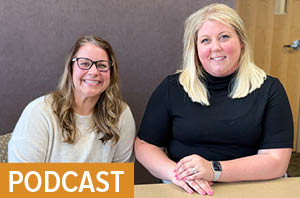
In this episode of Beyond the Checkup, certified nurse midwives Jessica Borgstrom and Kristin Hazeman walk through what it really means to design the birth experience you actually want. Not a perfect plan, but a supported one.
They explain how trust, communication, and preparation can completely change how a birth feels, even when it takes unexpected turns. Because a positive birth is not about everything going exactly right. It is about feeling heard, respected, and supported every step of the way.
This episode covers how to build a birth plan that reflects your preferences, how to advocate for yourself early, and why the relationship you build with your provider matters more than any checklist.
Episode Highlights (Timestamps)
[00:00:44] What “partnering with patients” really means in midwifery care
[00:02:24] Why feeling heard is the most important part of a birth experience
[00:03:34] Common fears during pregnancy and labor
[00:06:04] How to advocate for yourself early in pregnancy
[00:07:20] What makes a birth feel positive even when plans change
[00:08:56] What a birth plan really is and how to think about it
[00:10:28] How environment impacts labor and patient experience
[00:13:05] Creating a plan that is both empowering and flexible
[00:15:04] Staying grounded and avoiding overwhelm during labor
[00:18:14] Final advice: trusting your body and the process
Resources Mentioned
- Beyond the Checkup Podcast – Stellis Health
- Jessica Borgstrom
- Kristin Hazeman
- Midwifery Services at Stellis Health
- Stellis Health Appointment Scheduling
Memorable Quotes
“Birth is unpredictable, but feeling heard changes everything.”
“A positive birth is not about perfection. It is about feeling supported.”
“Your birth plan is not a checklist. It is how you want to feel.”
“We build trust early so you feel confident later.”
“Your body is meant to do this.”
What You Will Learn
- What it really means to partner with your provider
- How to advocate for yourself before labor begins
- Why birth plans should be flexible, not rigid
- What creates a positive experience even when things change
- How environment and support impact labor
- What partners can do to be involved and helpful
Listen to the latest episodes on:
Transcripts
[00:00:00] Peter Waggoner, Host: Today we’re talking about how to design the birth experience you actually want.
[00:00:04] Peter Waggoner, Host: With certified nurse midwife, Jessica Bostrom and Kristen Hazeman. Let’s dive in. How are you two doing? It’s been about a year since I’ve seen you last.
[00:00:13] Kristin Hazeman: It has. Good, thank you. And yourself.
[00:00:15] Peter Waggoner, Host: Oh, wonderful. Thanks. Has anything changed in the world of midwife since then?
[00:00:19] Kristin Hazeman: She’s got
[00:00:19] Jessica Borgstrom: a
[00:00:19] Kristin Hazeman: lot
[00:00:19] Jessica Borgstrom: busier.
[00:00:20] Kristin Hazeman: Yes, I have. So she’s been
[00:00:21] Jessica Borgstrom: on her own.
[00:00:22] Peter Waggoner, Host: Do tell. How’s that?
[00:00:23] Kristin Hazeman: Hey, it’s been wonderful. I’ve gotten to attend many births and partner with a lot of moms, so it’s been beautiful.
[00:00:29] Peter Waggoner, Host: And how about you?
[00:00:30] Jessica Borgstrom: Yes. Still going strong. Yep. We’re growing like crazy and spending a lot of time delivering babies and with moms and it’s been wonderful.
[00:00:37] Peter Waggoner, Host: When you guys, say partner with patients, what does that partner with patients look like during pregnancy and delivery?
[00:00:44] Kristin Hazeman: I love that term. So when we partner with somebody, I always tell my patients, it’s our goal to provide you with all of the options and the education pieces so you know what you’re choosing. And then to really make sure that they understand everything and follow their [00:01:00] recommendations. Our goal is to educate and then follow.
[00:01:03] Kristin Hazeman: So
[00:01:04] Peter Waggoner, Host: you don’t run into a scenario where someone’s just completely convinced that their way is the only way, and do you just let that go? How does that work?
[00:01:10] Kristin Hazeman: We just educate. Yeah, right. We just re reeducate and make sure that they know what they’re saying and provide, the reasons why that may not be the best option for them and what may be a better option for them.
[00:01:23] Jessica Borgstrom: Yeah, I think it goes even like a level deeper than that. When we talk about partnering with patients. It all starts on a foundation of trust. So they come and see us and right at that first visit, we’re getting to know them. We’re talking about their family, why they came here, who their significant other is, what their other kids are, their other birth experiences.
[00:01:41] Jessica Borgstrom: And we’re laying that foundation of trust by truly developing a relationship with them. And the rest, , it goes from there. So that partnering with them from there is first getting to know them and then helping them cultivate the experience that they want.
[00:01:54] Peter Waggoner, Host: And that’s basically round one, right?
[00:01:56] Peter Waggoner, Host: Exactly. ’cause then once you get through the first one and then there’s more, you just [00:02:00] pick up where you left off. Exactly. And maybe learn some things from before, correct?
[00:02:02] Jessica Borgstrom: Yes, absolutely. Absolutely. So many times patients come in and I’m like, okay, we’re gonna start birth planning. And they’re like, let’s just do it like we did last time.
[00:02:08] Jessica Borgstrom: That worked well.
[00:02:09] Peter Waggoner, Host: and obviously you have deep notes, correct?
[00:02:11] Jessica Borgstrom: Yeah. Right? Yes.
[00:02:12] Peter Waggoner, Host: Right. Where you’re like, earth, your memories must be amazing. So
[00:02:15] Jessica Borgstrom: no, lots of notes. Lots of notes, yeah.
[00:02:17] Peter Waggoner, Host: In your, world of view, why then is it important for women to feel heard during their birth experience?
[00:02:24] Jessica Borgstrom: letting women feel heard during their birth experience is the most important piece. Birth is unpredictable. We don’t know what’s gonna happen most of the time. so if women feel like they have a voice and they feel heard, even when things go astray, even if we go for c-section or things don’t go how we anticipate. They’re still gonna feel like they had control over their birth experience, which is really important.
[00:02:44] Peter Waggoner, Host: So when you meet with new mothers or this scenario how far along are we in the process here?
[00:02:50] Kristin Hazeman: Well, we typically start at about seven to eight weeks that we start seeing patients, really talking about the early signs and symptoms of pregnancy, talking about how to mitigate [00:03:00] those and manage those. We really don’t start talking about birth planning until 28 weeks.
[00:03:05] Kristin Hazeman: And I feel like we have a really great process where we really dive into the stages of labor. We dive into what their options are for both pharmacological pain management and non-pharmacological pain management, and also addressing some of the things that they’re gonna see preemptively postpartum.
[00:03:20] Peter Waggoner, Host: So when you go through this process, there’s obviously gonna be fears or concerns that pop up or crop up. Do you find those happen early, middle end, or all over the place? And what are those, what are some of the common things that you guys have to encounter?
[00:03:34] Jessica Borgstrom: Yeah, I feel like they start. In third trimester and people are getting nervous about what to expect, especially first time moms because they’ve never experienced labor before.
[00:03:44] Jessica Borgstrom: And one of the biggest fears is how do I know if I’m in labor? I promise you, you can’t miss it. Right? if we’re still thinking, I don’t know if this is it or not, probably not it yet. Right. And so that’s, I’d say one of the biggest fears in third trimester. Don’t you think?
[00:03:55] Jessica Borgstrom: Like, how am I gonna know? I promise I don’t
[00:03:57] Kristin Hazeman: wanna come in and be sent home.
[00:03:59] Jessica Borgstrom: Yeah.
[00:03:59] Kristin Hazeman: It’s like [00:04:00] we’re happy to see you. Yes. I’m more than happy to walk you through it. Yes.
[00:04:04] Jessica Borgstrom: And then a whole different level of fears happen when labor starts. Typically in the beginning I feel like people are pretty calm and, and doing okay, but as we hit transition and get further closer to meeting baby, that’s when those fears creep up, which is really important that moms feel heard at that time and that they feel like they’re partnered with.
[00:04:23] Jessica Borgstrom: And that’s why we do all that prep work prenatally. So we can be like, no, we prepared for this. We know this is normal. And that can be very just calming for patients
[00:04:30] Peter Waggoner, Host: from that regard. What do you think the biggest difference is then when they, you see someone now a second and third time, what are some of those fears that have been put?
[00:04:38] Peter Waggoner, Host: Do, do they still crop up because now you know what to expect? You know, that’s a little thing too.
[00:04:42] Kristin Hazeman: Yeah, absolutely.
[00:04:43] Peter Waggoner, Host: What’s that like?
[00:04:44] Kristin Hazeman: I feel like we’ve seen more of the anxiety come into play if something has gone awry with the first pregnancy uhhuh. Yeah. So a lot of times it’s the moms that are coming to us that haven’t had a baby with us before.
[00:04:53] Kristin Hazeman: This, and this happened in a previous delivery. And so now they’re anxious about those things. The moms who I feel like have had babies with [00:05:00] us before come in very relaxed and just, we’re gonna do it just the way we did last time. Yeah,
[00:05:05] Peter Waggoner, Host: yeah. Let’s go. Yeah. Right. That type of thing. Exactly.
[00:05:07] Jessica Borgstrom: To extend on that, we have a lot of people who transfer from other facilities for our midwife services because we do midwifery care different here than other bigger facilities do. We cover our own patients for the most part. Obviously when we go on vacation or something, we cover for each other, but for the most part we cover our own patients and that partnering with our own patients and being there with them just creates a different environment for their birth.
[00:05:29] Jessica Borgstrom: And we have patients who transfer to us and do bring in that perspective like. I had all of these things go wrong last time I didn’t feel heard. I had to advocate for everything, every step of the way in my birth plan, where that doesn’t really happen here as much because we birth plan with them, we’re there for delivery, and then we also educate the nurses up on labor and delivery on how we can help prepare the room and environment for this patient.
[00:05:54] Jessica Borgstrom: So. It’s really a, it’s just a different type of care.
[00:05:57] Peter Waggoner, Host: What does that look like then? How can women start advocating [00:06:00] for themselves early in the pregnancy and not just during labor? What are some of those things?
[00:06:04] Jessica Borgstrom: That’s a great question. We give them a birth plan at 28 weeks and we encourage them to take it home and go through it with who’s ever gonna be in the room for support.
[00:06:15] Jessica Borgstrom: So whether that is a significant other, whether it’s a doula, whether it’s a grandma who is ever gonna be there with them for support, we want them to go through the birth plan with them, and then ideally they come to their next appointment with ideas on their birth plan and with their support person so that everybody in the room can go through this together.
[00:06:32] Jessica Borgstrom: Everybody can be on the same page, that when they come into labor, there’s no advocating that needs to be done. ’cause the foundation is already all laid.
[00:06:39] Kristin Hazeman: and I feel like the birth plan that we you’ve developed is got a lot of good prompts on it. Yeah. Of things, different things like, oh, what is that?
[00:06:46] Kristin Hazeman: I should look into this. Or, oh, I have more questions. Can we talk more about this? Or, I feel like we’re kind of filling in some of those pieces when they come back that time and answering anything that’s come up. As we know, social media is a huge influence in all of our patients’ lives right now.
[00:06:59] Kristin Hazeman: [00:07:00] And so kind of correcting maybe some missteps and filling in some pieces is really important as well.
[00:07:05] Peter Waggoner, Host: And then in terms of keeping things positive, what makes a birth feel that way for a patient? Even if nothing goes as planned, it seems well close to, or let’s say things go off the rails a little bit.
[00:07:17] Peter Waggoner, Host: What makes things positive then? How do you do that? How do you keep it there?
[00:07:20] Jessica Borgstrom: Education. Going and talking with patients every step of the way. Like, Hey, I know we birth planned X, Y, and Z right now. What I’m seeing is that. You’re not tolerating this very well and I feel like you would be more comfortable here.
[00:07:35] Jessica Borgstrom: And so communication every step of the way and also laying that foundation of partnering with patients so that they feel the trust and they feel confident in the things that we’re telling them in that moment. ’cause it’s a vulnerable state, right? We’re they’re in labor, it’s hard to make decisions.
[00:07:51] Jessica Borgstrom: And so just starting that process way earlier, long before labor starts can just make a. Birth experience positive regardless of what [00:08:00] is happening.
[00:08:00] Kristin Hazeman: I think too, giving them the space to really hash out those feelings, right. In the moments where we talk through the decisions and debrief what’s happening has been super helpful for a lot of patients.
[00:08:14] Jessica Borgstrom: Yeah, that’s, that’s true. I a lot of times after delivery you’ll go and be like, Hey how was your birth experience? Let’s talk about it. I know it didn’t go as we anticipated. How are you feeling about it? And just giving them a space to be heard and giving them a space to grieve, the process that they thought was gonna happen or be excited about how it did go and celebrating them with them in the joy of how it went and different.
[00:08:34] Jessica Borgstrom: I mean, just having those conversations is really helpful. Absolutely.
[00:08:37] Peter Waggoner, Host: This is a two-parter. Mm-hmm. For those that don’t know, IE me, , or anyone else listening right. What is really, what is a birth plan like? What does that look like? What is it? Yeah. And then what are some of the things that women can put into the birth plan that you maybe wouldn’t be as realistic?
[00:08:52] Peter Waggoner, Host: So what really is it and what are some of the things to manage that side of it?
[00:08:56] Kristin Hazeman: Yeah, so a birth plan really talks about your preferences [00:09:00] on the overall environment, your thoughts and feelings when it comes to pain management, who you want to be present in the room different things. When we talk about the.
[00:09:10] Kristin Hazeman: Management of the third stage of labor or the delivery of the placenta, how do you anticipate or foresee that going?
[00:09:16] Kristin Hazeman: Yeah.
[00:09:16] Kristin Hazeman: Kind of covers each of those steps in more detail.
[00:09:20] Jessica Borgstrom: Yeah. And I’d say a birth plan, right? So we’re going through some of that stuff and we’re talking about the small details, but the overarching birth plan, I like to tell people it’s birth preferences.
[00:09:30] Jessica Borgstrom: How do we want, how do we want things? Like, tell me your vision of your birth. How can we get there, right? And most people will take a step back and not have really specific bullet points. Like, I want this to go this way and this to go this way. It’s more like, I wanna feel heard, I want to be safe. I want to have X, Y, and z I want the environment to be calm.
[00:09:49] Jessica Borgstrom: I want my support person to be there and be included in decisions And so it’s more an overarching. Feeling that they want to feel and, and want to achieve instead of a [00:10:00] checklist. Right? so that’s where talking about it with the support person in the clinic really helps prepare everybody for that environment, I feel like.
[00:10:09] Jessica Borgstrom: And then we take it a step further by sending that up to the labor and delivery nurses as well. Mm-hmm. So that when. Say a patient is really wanting a unmedicated physiologic birth. That’s kind of what we specialize in. So, letting their body do what it’s meant to do that patient calls either us or labor and delivery and says, Hey, I’m in labor.
[00:10:28] Jessica Borgstrom: The nurses can pull out the birth pan and be like, okay, they’re environment. We’re gonna dim their lights. We’re gonna get an aromatherapy diffuser going. We’re gonna get the tub started so that when the patients walk onto the birth center and into their room. They already feel like they’re heard because their room is set up how they want it.
[00:10:41] Jessica Borgstrom: And little things like that can really make a huge difference in their
[00:10:45] Peter Waggoner, Host: experience. Do you get feedback on that from people? They say, whoa,
[00:10:48] Kristin Hazeman: yes. Yes.
[00:10:49] Peter Waggoner, Host: Absolutely. What’s some of the things you hear?
[00:10:50] Kristin Hazeman: The twinkling lights are always love it, big things so that the nurses will put up these beautiful twinkling lights in the room and then we shut all the other lights off, and just that ambiance and like the [00:11:00] calm, the warmth that you feel.
[00:11:01] Kristin Hazeman: Kind of like that Christmas warmth when you put all your decorations up, right? Yeah. Is what they get. That is the thing that I feel like I hear most about.
[00:11:07] Jessica Borgstrom: Well, and it’s so starkly different than medicalized birth with bright fluorescent lights, right? Mm-hmm. Like you you lay, you do early labor at home, and then you come in and if all of a sudden you’re blinded with fluorescent lights, like you wanna talk about decreasing your oxytocin in your body and stalling your labor just things like that, little things like that just really make the experience, that much different. And those are things that patients hear. Or when we have patients who transfer to us, we hear, I showed up at the facility and they asked me all my admission questions and the lights were bright and they made me sit in the bed and we can do it differently and still do it safely.
[00:11:41] Jessica Borgstrom: And so that’s what we’re here for. Exactly.
[00:11:42] Peter Waggoner, Host: Do you two feel as though that’s a legit. Competitive edge to why someone would come to Stellas Health for what you do?
[00:11:50] Jessica Borgstrom: Absolutely. A hundred
[00:11:50] Kristin Hazeman: percent. Yes.
[00:11:52] Jessica Borgstrom: It’s a totally different type of care.
[00:11:53] Kristin Hazeman: Yeah. Nobody does it
[00:11:54] Peter Waggoner, Host: like you do it here.
[00:11:55] Peter Waggoner, Host: So you don’t need to be from the Monticello or Buffalo area to do this either, do you?
[00:11:58] Jessica Borgstrom: No. We have people [00:12:00] transfer from, you know, the cities, maple Grove Tel Think Cloud Little Falls all over. I have people travel. I have two people traveling from Brainerd. Yeah. I’ve got people all over.
[00:12:09] Peter Waggoner, Host: Destination. Amazing stuff.
[00:12:11] Peter Waggoner, Host: Uh, another note is this feels like there’s a lot of psychology for what both of you have to do that plays into this. Is that true?
[00:12:19] Kristin Hazeman: The mind itself can block the release of the hormones of such as Pitocin, like Jesse had mentioned. And so it can stall labor out, right? Yeah. You can have a mind block that doesn’t allow you to continue to progress.
[00:12:32] Kristin Hazeman: But when we take these steps and we provide this environment and we sit and we listen, and we talk through things in their plan, that’s what helps bring those blocks down and allows the body to do what it’s made to do.
[00:12:43] Peter Waggoner, Host: We mentioned this early on in our program here today in the podcast, about listening, and, you know, and I said, well, is there a plan?
[00:12:52] Peter Waggoner, Host: You go, it’s whatever they want. So how do you, you create a plan that is empowering, but flexible at the same time. Like I, I know [00:13:00] it’s easy to say, but it must be, well, these are some things we really need to do. Like, how do you work through that?
[00:13:05] Kristin Hazeman: I think we highlight their priorities too. Like what in this birth is something that you want to have this, what is the 100% thing you want to happen during this birth?
[00:13:14] Kristin Hazeman: And we try to focus and make that a priority. The other pieces are important too, but at least if we can get one big one right. Yeah.
[00:13:21] Jessica Borgstrom: I mean, I feel like I’m a broken record here but I do think it just comes down to that partnering and that relationship.
[00:13:27] Jessica Borgstrom: There’s so many times where you just don’t know how it’s gonna go and you, I mean, even if this is your third baby man, those third babies, you just don’t know. They could flip last minute, they could do something different. And I mean, an example is I had a patient who had had bad experiences elsewhere and came here for a specific birth.
[00:13:44] Jessica Borgstrom: And her baby flipped to breach during delivery. Dang. And we had to go down for a C-section. She was nine centimeters. And at the end, I mean, that is like throwing your birth plan out the window, right? Yes. And at the end of it, at the end of her delivery and the next day I sat down in a room and I’m like, how you [00:14:00] doing?
[00:14:00] Jessica Borgstrom: That was a big change. How you doing? She’s like, it was the best birth I’ve had. And I’m like, tell me that. Like, tell me why. And she’s like, I did it. I was supported. I had the environment, I had everything I wanted. I mean, now I had a C-section, but it was beautiful. My labor was wonderful. that’s what it’s about. It’s all about being heard and partnering and doing what you can, and really, truly acknowledging that women are people and that they have strong opinions about how they want to birth their babies, and we’re there to support that.
[00:14:30] Kristin Hazeman: Birth is, is like a, like a river, right?
[00:14:32] Kristin Hazeman: You never step into the same river twice. There’s always things under the surface that you can’t foresee, and we’re here to ride the rapids with you and get you to the end.
[00:14:41] Peter Waggoner, Host: Okay. Speaking of the rapids, and let’s say they’re picking up Yeah. And, uh, someone’s in labor and, you know, how can they advocate for not being overwhelmed?
[00:14:49] Peter Waggoner, Host: Because I do think sometimes, no matter what the situation, we can get in our heads Oh yeah. Where we wanna, we. We think it’s gonna be this, but then it becomes that.
[00:14:57] Peter Waggoner, Host: So how can they advocate [00:15:00] to have some form of change and make sure everything’s empowered and working?
[00:15:04] Jessica Borgstrom: Yeah. I feel like you come back to your breath.
Those moments when it feels like things are getting outta control. We’re gonna take like a couple deep breaths together. We’re gonna recenter, we’re gonna take a couple deep breaths now there are true emergencies in obstetrics. but barring a true obstetric emergency where we need to move very, very quickly, we have time to talk, we have time to talk through the changes.
[00:15:22] Jessica Borgstrom: We have time to take a breath, we have time for the patient and their significant other support doula, whoever it ends up being, to talk about the options that have been presented to them. And just taking that extra couple minutes makes a big difference.
[00:15:35] Kristin Hazeman: Absolutely. If you’re able to talk through and kind of preempt what’s coming.
[00:15:39] Kristin Hazeman: Or what’s changing, or even just a lot of times like transition kind of hits hard and fast. Mm-hmm. And all of a sudden it’s, I can’t do this. We’re gonna take a deep breath, we’re gonna take it one contraction at a time. Mm-hmm. And go through it that way. Mm-hmm. People respond really well.
[00:15:53] Jessica Borgstrom: I think the other difference is we’re there.
[00:15:55] Kristin Hazeman: Exactly.
[00:15:56] Jessica Borgstrom: So, yeah. You know, that’s another thing that sets our midwifery [00:16:00] program apart is. If you want us there for labor support, we’re there. Mm-hmm. So like you wanna talk about building that partnership and those found that foundation and that trust. I mean, I wish when I delivered my daughter, my person walked in the room when I was struggling.
[00:16:12] Jessica Borgstrom: Right. Like, that would’ve been fantastic. And that’s just not how it’s done other places unless you do a home birth or something. So we are able to provide that within the safety net of a hospital setting.
[00:16:22] Peter Waggoner, Host: A another competitive edge for Stellas, right?
[00:16:25] Peter Waggoner, Host: No, seriously. That’s just a whole nother one. So, partners and roles, you know, as a man, like I can, honestly, I don’t know how this happens or how people can actually, women can do this. Come on. I mean, like, it’s, we, we have, there’s, you know how you can say something like, yeah, I understand, but you really don’t,
[00:16:45] Jessica Borgstrom: right?
[00:16:45] Peter Waggoner, Host: Because you can’t. Deal with that. So we obviously wanna support and have a role, but we don’t really know what to support or how to support. So how can that happen for partners to make it for the optimal experience? What do they [00:17:00] need to do?
[00:17:00] Kristin Hazeman: I feel like we kind of pull ’em in. Yep. Especially since we’re there.
[00:17:03] Kristin Hazeman: And kind of teach them how to do counter pressure. Yep. We’ll try to do different positions where, you know, they’re slow dancing with their partner mm-hmm. So that they feel involved. We’ve even had dads help catch babies.
[00:17:14] Jessica Borgstrom: Absolutely.
[00:17:15] Kristin Hazeman: Yeah.
[00:17:15] Jessica Borgstrom: All the time.
[00:17:16] Peter Waggoner, Host: Really?
[00:17:16] Kristin Hazeman: Yep. Yes.
[00:17:17] Jessica Borgstrom: Tell
[00:17:17] Kristin Hazeman: them
[00:17:17] Peter Waggoner, Host: what to, are they nervous
[00:17:18] Kristin Hazeman: A little bit?
[00:17:19] Kristin Hazeman: Yeah.
[00:17:19] Peter Waggoner, Host: I would, I I would say I’m good. Like, because that’s too much responsibility.
[00:17:23] Jessica Borgstrom: Yeah. You tell them likes
[00:17:24] Peter Waggoner, Host: to do with
[00:17:25] Jessica Borgstrom: their hands. Like I, you do it once, like, okay, I’m gonna do counter pressure and you’re gonna put your hand right on her lower back, and I’m gonna do it once and then I’m gonna teach you how to do it.
[00:17:33] Jessica Borgstrom: You’re gonna do it like you just include them. They’re usually more than willing, like if you tell them what to do, you know? Absolutely. Like
[00:17:38] Peter Waggoner, Host: I’d be good with that, but it’s the catching, I think I would say. Yeah.
[00:17:41] Jessica Borgstrom: I’d say maybe like, what do you think 25% of dads are like, yeah, gimme some gloves.
[00:17:45] Jessica Borgstrom: Let’s do it.
[00:17:46] Peter Waggoner, Host: Seriously?
[00:17:46] Jessica Borgstrom: Yeah.
[00:17:47] Peter Waggoner, Host: Oh God.
[00:17:48] Jessica Borgstrom: They get super excited.
[00:17:49] Peter Waggoner, Host: That’s the craziest thing ever. Well, good for them, I guess. Right?
[00:17:52] Jessica Borgstrom: I always whisper like, don’t worry, my hands are right underneath your, you’re not gonna fumble. It’s fine.
[00:17:56] Kristin Hazeman: Nobody’s gonna drop
[00:17:57] Jessica Borgstrom: anywhere. We’re fine. No, I promise you if you do, I got it.
[00:17:59] Jessica Borgstrom: We’re
[00:17:59] Peter Waggoner, Host: [00:18:00] good. But I think of that big game I had on the 10 yard line that I did fumble, and then it’s like, it happened, you know? So it’s like that can’t happen. Oh my. If there’s one thing you wish every woman would know going into labor maybe that they don’t, what would it be?
[00:18:14] Jessica Borgstrom: Your body’s literally meant to do this.
[00:18:16] Peter Waggoner, Host: Wow.
[00:18:16] Jessica Borgstrom: You can do it.
[00:18:17] Peter Waggoner, Host: Mm-hmm.
[00:18:17] Jessica Borgstrom: You surround yourself with the appropriate support, with the correct team. You do all of your prep work prenatally and then you trust the process. Your body’s meant to do this.
[00:18:26] Kristin Hazeman: A hundred percent. That’s exactly what I was gonna say is trust. Trust that your body is able to do this.
[00:18:30] Jessica Borgstrom: Mm-hmm.
[00:18:31] Peter Waggoner, Host: You each have a forum here right now to message to your, patient base and future patient base. So, go ahead and take the floor. Either one of you go first. What was the, what would be the one thing that you would say as to, Hey, if you’re thinking about this, you have to see me. Yeah.
[00:18:45] Kristin Hazeman: I would say that if you are wanting a form of collaborative decision making and education and somebody to be there to, to cheer you on and to support you through this life change, come on over.
[00:18:57] Jessica Borgstrom: Yeah, that’s a good way to put it. Yeah. I’d [00:19:00] say if you want to feel heard and you want to feel supported and you wanna feel partnered with. We’re your team. Absolutely.
[00:19:07] Peter Waggoner, Host: Jessica Kristin, thank you so much for joining us here today. Thank you. It was great.
[00:19:11] Jessica Borgstrom: Thank you. Yeah,
[00:19:11] Peter Waggoner, Host: that was good stuff. Uh, this is my favorite topic.
[00:19:14] Peter Waggoner, Host: Everybody loves the babies. Come on, let’s be honest.
[00:19:16] Jessica Borgstrom: They’re wonderful.
[00:19:16] Peter Waggoner, Host: Yeah. That’s right. Yes. That’s gonna be a wrap for today’s episode of Beyond the Checkup. If this conversation gave you something to think about and it better, it was too good, pass it along to someone who could use it, please. And as always, we’re here to support you every step of the way.
[00:19:30] Peter Waggoner, Host: Thanks for listening.
[00:19:31] Kristin Hazeman: Thank you.