
The lab results came through on a Tuesday afternoon. Most of the numbers had the word normal beside them. One did not.
A1C: 5.9.
Underneath was a short note from the clinic. Slightly elevated. We will keep an eye on this.
He read it in the parking lot at work, decided it did not sound like an emergency, and went back inside. That was two years ago. He has not thought about it much since.
That is how prediabetes usually arrives. Not as a diagnosis anyone remembers getting. Just a number a little outside the range, a message that sounds calm, and a life that keeps right on moving.
Here is the part that does not get said clearly enough.
Prediabetes is one of the few things on a lab report that regularly moves back in the right direction.
Not managed. Not slowed down. Actually reversed, by ordinary people making changes that are smaller than most of us assume.
Prediabetes is not a mild version of diabetes. It is the window before it.
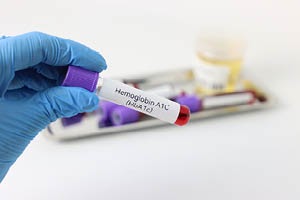
Quick Navigation
- What Prediabetes Actually Is
- Your A1C, Explained Without the Math
- Who Should Be Tested, and When
- The Part Most People Never Hear
- What Actually Moves the Number
- Getting Through the Holidays Without Losing Ground
- Where to Get Help Close to Home
- Your Prediabetes Action Plan
- Frequently Asked Questions
- A Number, Not a Verdict
What Prediabetes Actually Is
Think of insulin as a key. When you eat, sugar enters your bloodstream, and insulin unlocks your cells so the sugar can get in and be used for energy.
With prediabetes, the locks get stiff. Your cells stop responding the way they used to, so your pancreas makes more insulin to compensate. For a while, that works. Your blood sugar stays close to normal because your body is working harder behind the scenes to keep it there.
Prediabetes is the stage where that extra effort starts to show up in your labs. Blood sugar is higher than it should be, but not high enough to be called diabetes.
It is remarkably common. The CDC estimates that more than 2 in 5 American adults have prediabetes, and roughly 8 in 10 of them have no idea. There are usually no symptoms at all. That is not a failure of paying attention. There is simply nothing to notice.
The Numbers, in Plain Language
Three tests are used. Any one of them can identify prediabetes.
| Test | Normal | Prediabetes | Diabetes |
|---|---|---|---|
| A1C | Below 5.7% | 5.7% to 6.4% | 6.5% or higher |
| Fasting blood sugar | Below 100 mg/dL | 100 to 125 mg/dL | 126 mg/dL or higher |
| Two hour glucose test | Below 140 mg/dL | 140 to 199 mg/dL | 200 mg/dL or higher |
One result is usually confirmed with a second test before anything is settled. If your number came back in the middle column, that is information, not a verdict.
Your A1C, Explained Without the Math
A1C is the test most people end up talking about, and it is the one most often misunderstood.
A fasting blood sugar is a photograph.
It tells you what your blood sugar was doing at one moment on one morning. A1C is closer to a season summary. It reflects your average blood sugar over roughly the past three months.
That has two consequences, and they cut in opposite directions.
The first is that you cannot fix an A1C with one careful week before your blood draw. Plenty of people try. The number does not really care.
The second is more encouraging. One holiday dinner cannot ruin it either. A1C responds to what you do most days, not to any single day.
That is genuinely good news for anyone reading this in November.
Quick Tip: What to Ask For
If it has been a few years, you can simply ask. Say: I would like my A1C checked at my next visit.
Ask what your number was, not just whether it was normal. A 5.6 and a 5.4 are both normal, and they are not the same story.
If you have had one before, ask how it compares. The direction matters as much as the number.
Who Should Be Tested, and When
The American Diabetes Association recommends testing all adults starting at age 35, and repeating it at least every three years if results are normal.
The U.S. Preventive Services Task Force recommends screening adults ages 35 to 70 who have overweight or obesity, also about every three years.
Testing earlier makes sense if any of these apply to you:
- A parent, brother, or sister with type 2 diabetes
- Being overweight, particularly with weight carried around the middle
- Physical activity fewer than three times a week
- Gestational diabetes during any pregnancy, or a baby born over nine pounds
- Polycystic ovary syndrome
- High blood pressure
- Low HDL cholesterol or high triglycerides
- A history of heart disease or stroke
- African American, Hispanic or Latino, American Indian, Alaska Native, Asian American, Native Hawaiian, or Pacific Islander heritage
Did You Know?
About half of women who had gestational diabetes go on to develop type 2 diabetes later in life.
That risk does not end when the pregnancy does, and it is easy for it to get lost in the years that follow.
If gestational diabetes is anywhere in your history, mention it at your next visit, even if that pregnancy was fifteen years ago.
The Part Most People Never Hear
There is a large, well known study behind almost everything in this section. It is called the Diabetes Prevention Program, and it followed more than 3,000 adults with prediabetes.
One group made changes to what they ate and how much they moved, with support from a coach. Another group took metformin, a common diabetes medication. A third group took a placebo.
The lifestyle group lowered their chances of developing type 2 diabetes by 58 percent. In participants age 60 and older, it was 71 percent.
The medication group lowered their risk by 31 percent. That is a real result. It is also less than half of what the lifestyle group achieved.
Fifteen years later, researchers checked back in. The lifestyle group was still ahead, with 27 percent less diabetes than the placebo group.
The most effective treatment for prediabetes is not a prescription. It is a set of habits, and they are smaller than you think.
What the Weight Goal Actually Looks Like
The target in the study was 5 to 7 percent of body weight. Not a transformation. Not a number on a wall chart. A percentage.
| If you weigh | The goal is about |
|---|---|
| 180 pounds | 9 to 13 pounds |
| 200 pounds | 10 to 14 pounds |
| 220 pounds | 11 to 15 pounds |
| 250 pounds | 13 to 18 pounds |
Most people expect the answer to be forty or fifty pounds. It is not. And the blood sugar benefit starts showing up well before you reach the full goal.

The 150 Minutes, Broken Down
The activity target was 150 minutes a week. Written that way it sounds like a project. Broken down, it is smaller than most errands.
- Thirty minutes, five days a week
- Or about 22 minutes every day
- Or three ten minute walks a day, five days a week
Walking counts. It counted in the study, and it counts now.
This is not about a gym membership or a program you have to join.

What Actually Moves the Number
Start With What You Drink
If you change one thing, make it liquid sugar. Regular soda, sweet tea, energy drinks, flavored coffee drinks, and juice all send blood sugar up quickly, and they do it without making you feel full.
This tends to be the single highest impact swap available, and it is usually easier than changing meals.
Build the Plate, Do Not Ban the Carbs
There is no special diet here, and cutting out carbohydrates entirely is neither necessary nor realistic.
What helps:
- Fill about half your plate with vegetables
- Choose whole grains over refined ones when the choice is easy
- Pair carbohydrates with protein, fat, or fiber, which slows the rise in blood sugar
- Pay attention to portion size, especially with bread, pasta, rice, and potatoes
An apple with peanut butter behaves very differently in your body than a plain glass of apple juice, even though both are apple.
Walk After Your Biggest Meal
This one is small and underrated. A ten to fifteen minute walk after your largest meal of the day helps blunt the blood sugar rise that follows it.
It requires no equipment, no change of clothes, and no planning. It works best when it becomes automatic, the way clearing the table is automatic.
Protect Your Sleep
Short sleep makes your cells less responsive to insulin. Several nights in a row of five or six hours can nudge blood sugar upward on its own, regardless of what you ate.
Sleep is rarely mentioned in blood sugar conversations. It belongs in them.
Notice Stress
Stress hormones raise blood sugar directly. That is normal biology, and it is not a character flaw. But chronic stress keeps that response switched on, and it also tends to be the thing that pushes exercise and cooking off the calendar first.
Myth vs. Fact
| Myth | Fact |
|---|---|
| Prediabetes means I will get diabetes eventually. | For many people it does not progress, particularly with modest weight loss and regular activity. |
| I would feel it if my blood sugar were high. | Prediabetes almost never causes symptoms. A blood test is the only way to know. |
| Sugar causes diabetes. | The picture is more complicated, involving weight, activity, genetics, and age. But sugary drinks are still worth cutting. |
| I have to give up carbohydrates. | Type, portion, and what you eat alongside them matter more than elimination. |
Getting Through the Holidays Without Losing Ground
November through early January is a stretch of about six weeks. Within it, there are perhaps eight to ten actual celebrations. The rest is regular days.
That distinction matters, because the regular days are where blood sugar is decided. Nobody develops diabetes from Thanksgiving dinner.
A few things that genuinely help:
- Eat normally before a party. Arriving hungry after skipping lunch reliably backfires.
- Take the walk. After the big meal, before the dishes, with whoever will come along.
- Look at what is in your glass. Punch, cider, cocktails, and second helpings of wine add up quietly.
- Deal with leftovers deliberately. A week of pie for breakfast is a bigger factor than the holiday itself.
- Get back to your routine the next morning rather than the next Monday.
The holidays are not the problem. The six weeks of treating every day like a holiday is the problem.
Where to Get Help Close to Home
Start with a blood test. Call 763-682-1313 or request an appointment online. If you are due for a physical anyway, this can simply be part of it.
Take the one minute risk test. The CDC and the Ad Council host a short quiz at doihaveprediabetes.org. Seven questions. It is not a diagnosis, but it is a reasonable way to decide whether to make the call.

Ask about a lifestyle change program. The National Diabetes Prevention Program is the real world version of the study above. It runs for a year with a trained coach and a small group, in person or online. Many insurance plans cover it, and Medicare covers it for those who qualify. Programs can be found at cdc.gov/diabetes-prevention.
Bring your whole history to the visit. Family history on both sides, any gestational diabetes, your blood pressure, and your cholesterol all feed into the same picture. Your provider is looking at the whole thing, not one number in isolation.
Your Prediabetes Action Plan
Print this and put it where you will see it.
This Month
- ☐ Find out my most recent A1C or fasting blood sugar, or confirm I have never had one.
- ☐ Take the one minute risk test at doihaveprediabetes.org.
- ☐ Call 763-682-1313 or request an appointment if I am due.
At My Visit
- ☐ Ask for the actual number, not just normal or not normal.
- ☐ Share my family history, including my father’s side.
- ☐ Mention any gestational diabetes, however long ago.
- ☐ Ask whether a lifestyle change program makes sense for me.
In the Next Three Months
- ☐ Cut one sugary drink a day.
- ☐ Add a ten minute walk after my largest meal.
- ☐ Aim for 150 minutes of movement a week, in whatever pieces fit.
- ☐ Book the follow up blood test before I leave the clinic.
Frequently Asked Questions
What is a normal A1C?
Below 5.7 percent is considered normal. From 5.7 to 6.4 percent is prediabetes. At 6.5 percent or above, on two tests, it is diabetes. Ask for your actual number so you can see where you sit within the range.
Can prediabetes be reversed?
Often, yes. In the Diabetes Prevention Program, participants who lost 5 to 7 percent of their body weight and moved about 150 minutes a week cut their risk of developing type 2 diabetes by 58 percent, and by 71 percent in those age 60 and older.
Does prediabetes have symptoms?
Usually none at all. That is exactly why it goes undetected in about 8 in 10 of the people who have it. A blood test is the only way to know.
How often should I be tested?
For most adults with normal results, about every three years starting at age 35. More often if you have risk factors or a previous elevated result. Your provider will help you set the interval.
Do I need to stop eating carbohydrates?
No. What matters more is the type, the portion, and what you eat with them. Pairing carbohydrates with protein, fat, or fiber slows the rise in blood sugar. Cutting sugary drinks tends to help more than cutting bread.
Will I need medication?
Not necessarily. Lifestyle change is the first line, and in the research it outperformed metformin by a wide margin. Metformin is sometimes recommended for people at higher risk, and that is a conversation to have with your provider.
I had gestational diabetes years ago. Does that still matter?
Yes. About half of women who had gestational diabetes go on to develop type 2 diabetes later. It is worth mentioning at your next visit even if the pregnancy was a long time ago.
My A1C went up slightly but is still normal. Should I do anything?
It is worth noticing. A number moving upward within the normal range is useful information, and it is a good reason to make one or two changes now rather than waiting to cross a line.
A Number, Not a Verdict
The man in the parking lot is not unusual. Most people who learn they have prediabetes do nothing in particular, not out of denial, but because nothing about the moment felt urgent.
So here is the case for treating it as if it were.
Prediabetes responds to effort better than almost anything else your provider will ever discuss with you. The changes that work are unglamorous and small. A walk after dinner. Water instead of soda. A blood test you actually schedule.
Stellis Health has cared for Wright County for more than 75 years. We are an independent, physician owned medical group with more than 60 primary and specialty providers in Buffalo and Monticello, which means the provider who sees your labs is the same one who knows the rest of your story.
We are not just your healthcare team. We are your neighbors.
If there is a number sitting in your chart that nobody has followed up on, this is the follow up. Call 763-682-1313 or schedule online.