
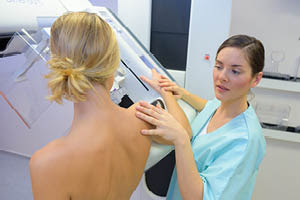
Breast cancer screening is one of the simplest habits in preventive medicine, yet the guidance keeps changing and the appointment itself is rarely explained.
The reminder card came in the mail sometime in August. It went on the counter, under the electric bill, and then into the drawer by the phone.
It is not that she decided not to go. She meant to call. Then work got busy, then her daughter needed a ride, then it was October and the card was still in the drawer.
Most women who put off a mammogram are not avoiding it out of fear. They are simply people with full lives and a task that never quite reaches the top of the list. The appointment feels vague. Nobody is entirely sure how often they are supposed to go anymore, what happens once they get there, or what all of it means.
So let us make it concrete. Here is what screening actually involves, what the current guidance says, what that new letter about breast density means, and what happens in the case most women worry about quietly: getting called back.
A mammogram is a 20 minute appointment that can change how a diagnosis begins. Very little else in preventive care offers that trade.
Quick Navigation
- When to Start, and How Often
- What Actually Happens During a Mammogram
- The Breast Density Letter You Now Receive
- Family History and When Screening Should Look Different
- What a Callback Really Means
- If Cost Is the Reason You Have Not Gone
- Why Women Put It Off, and What Helps
- How to Schedule at Stellis Health
- Your Mammogram Checklist
- Frequently Asked Questions
- Screening Close to Home
When to Start, and How Often
This is where most of the confusion about breast cancer screening lives, and for good reason. The guidance genuinely changed, and it changed recently.
In 2024, the U.S. Preventive Services Task Force lowered the recommended starting age for screening mammograms to 40. Their recommendation is a mammogram every two years for women ages 40 to 74 who are at average risk. That was a real shift. For years the same group had recommended starting at 50, with screening in your 40s left as an individual choice.
Other respected organizations recommend starting at 40 as well, though some suggest going every year rather than every two years. The groups agree on the important part. Screening should begin at 40 for women at average risk. They differ on interval.
If that sounds unsatisfying, here is the practical version: the difference between annual and every other year is a conversation worth having with your provider, and it depends on your history, your family, and your own comfort with the tradeoffs. The difference between screening and not screening is the one that matters most.
What About After 74?
Here the honest answer is that the evidence thins out. The Task Force concluded there is not enough evidence to say whether the benefits outweigh the harms for women 75 and older.
That does not mean stop. It means the decision becomes personal rather than automatic, based on your overall health and what you would want to do with the information. Talk with your provider about it rather than assuming the answer either way.
Did You Know?
Screening mammograms are for women with no symptoms. If you notice a lump, skin dimpling, nipple changes, or unusual pain, do not wait for your next scheduled screening. Call your provider. That situation calls for a diagnostic appointment, which is a different visit with a different purpose.
What Actually Happens During a Mammogram
For something so widely recommended, the appointment itself is rarely described. So here it is, start to finish.
You will be asked to undress from the waist up and put on a gown. A technologist, almost always a woman, will position one breast at a time on a flat surface. A clear plate lowers to flatten the tissue. That compression lasts a matter of seconds, and it is what makes the image clear enough to read.
Most appointments take about 20 minutes. The imaging itself takes far less than that.
At Stellis Health, both the Buffalo and Monticello clinics offer 3D mammography, also called tomosynthesis. Rather than one flat image, the machine takes a series of thin images that can be reviewed layer by layer, a bit like turning pages instead of looking at the whole book pressed flat. That matters for two reasons we will come back to: it finds more invasive cancers, and it produces fewer callbacks.
Does It Hurt?
It is uncomfortable, briefly. Most women describe firm pressure rather than pain, and it is over in seconds.
Two things genuinely help. Schedule during the week after your period, when breasts tend to be least tender. And tell the technologist if you are uncomfortable. They adjust positioning all day long and would much rather hear from you.
How to Prepare
Quick Tip: Before Your Appointment
- Skip deodorant, powder, and lotion on the day of your mammogram. They can show up on the images and cause confusion.
- Wear a two piece outfit so you only need to remove your top.
- Bring or arrange to send images from any previous mammogram at another clinic. Comparison to older images is one of the most useful tools a radiologist has.
- If you have had a COVID vaccine or booster recently, ask about timing. The Society of Breast Imaging suggests waiting four to six weeks.
- Mention breast implants, prior breast surgery, or breastfeeding when you schedule.
The Breast Density Letter You Now Receive
If you have had a mammogram since the fall of 2024, you received something new with your results: a statement about your breast density. That is not specific to you or to Stellis Health. A federal rule now requires every mammogram report in the country to include it.
The letters caught a lot of women off guard, so let us translate.

Breasts are made of fatty tissue and dense tissue, which includes glands and connective tissue. On a mammogram, fatty tissue looks dark and dense tissue looks white. Cancer also looks white. That is the whole issue in one sentence: dense tissue can make a small cancer harder to see, the way a snowflake is harder to spot against a white sky than a blue one.
Roughly half of women over 40 have dense breasts. It is common, it is normal, and it is not a disease or an abnormal result.
Two things are true at once, and both belong in the letter. Dense tissue makes mammograms somewhat harder to read, and dense tissue is itself associated with a modestly higher risk of breast cancer.
Dense breast tissue is not a diagnosis. It is a piece of information about how your mammogram should be read, and who should help you decide what comes next.
What it does not mean is that your mammogram was useless or that you now need a different test. Whether supplemental imaging such as an ultrasound or MRI helps women with dense breasts is still an open question in the research, and the Task Force has said the evidence is not yet strong enough to recommend for or against it.
What it does mean is that the letter is a conversation starter. Bring it to your provider. Your density, combined with your family history and other factors, is what determines whether anything should change about your screening. You can read more about breast cancer risk factors and warning signs in our 2025 breast cancer awareness article.
Family History and When Screening Should Look Different
Average risk is the assumption behind every guideline above. Some women are not at average risk, and the screening plan should look different for them.
Consider asking your provider for a formal risk assessment if any of the following apply:
- A first degree relative, meaning a mother, sister, or daughter, who had breast cancer, especially before menopause.
- Multiple relatives on the same side of the family with breast or ovarian cancer.
- A known BRCA1, BRCA2, or other inherited gene change in the family.
- A prior breast biopsy showing certain high risk changes.
- Radiation treatment to the chest at a young age.
- Ashkenazi Jewish ancestry.
One point gets missed constantly: family history on your father’s side counts just as much as your mother’s. Breast cancer risk genes pass through fathers, and men often do not know or mention the cancer history in their own families.
If a risk assessment places you in a higher category, your provider may recommend starting earlier, screening more often, adding breast MRI, or meeting with a genetic counselor. Those are not alarming steps. They are the system working the way it should, with a plan built for your history rather than the average. Learn more about women’s health services at Stellis Health.
What a Callback Really Means
This is the part almost nobody explains ahead of time, and it causes more anxiety than anything else in screening.
Sometimes a radiologist sees an area on your mammogram they want a closer look at, and the clinic calls you back. If that happens to you, please hold onto this: getting called back is fairly common, and fewer than one in 10 women who are called back turn out to have cancer.
Most callbacks come down to overlapping tissue that looked like something on a flat image, or a spot that simply was not captured clearly the first time. First mammograms get called back more often than later ones, for the simple reason that there is nothing older to compare against.
At a callback visit, you will usually have a diagnostic mammogram, which means more images focused on the specific area. You may also have an ultrasound. In many cases you get your results before you leave. The outcome is often that everything looks fine and you return to your normal schedule. Sometimes the recommendation is a follow up image in six months. Sometimes a biopsy is recommended, and even then, most biopsies do not find cancer.
Worth noting: 3D mammography reduces callbacks meaningfully, by up to 40 percent compared with 2D imaging alone. That is one of the quieter benefits of the technology, and it is available at both Stellis Health locations.
Things to Remember If You Get Called Back
- A callback is a request for more information, not a result.
- Ask when you call to schedule how quickly you can be seen. Sooner is usually possible, and waiting is the hardest part.
- Bring someone with you if it would help. There is no prize for going alone.
- Write your questions down beforehand. It is hard to think of them in the moment.
If Cost Is the Reason You Have Not Gone
This deserves its own section, because it is a real barrier and there is a real answer.
Minnesota runs a program called Sage that covers breast cancer screening at no cost for Minnesotans who qualify. It covers the office visit, the mammogram, and follow up services if your results are abnormal, including diagnostic imaging and biopsy.
Eligibility is based on age, household income, and insurance situation. It covers ages 40 to 74, and women ages 30 to 39 may qualify if they have symptoms or a family history. You can qualify if you have no insurance, and you can also qualify if you do have insurance but face copays, deductibles, or out of pocket costs you cannot manage.
To find out whether you qualify, call Sage at 1-888-643-2584.
Please do not assume you make too much or have the wrong coverage. The income limits are higher than most people expect, and the call takes a few minutes.
Why Women Put It Off, and What Helps
Almost nobody says out loud that they are skipping a mammogram. It just does not get scheduled. Here are the reasons we hear most, with the honest response to each.
| What we hear | What is worth knowing |
|---|---|
| I feel fine. | Screening is designed for women who feel fine. By the time a cancer causes symptoms, the options are usually more involved. Feeling well is the reason to go, not the reason to skip. |
| Nobody in my family has had it. | Most women diagnosed with breast cancer have no family history at all. A clear family history is reassuring, but it is not a reason to skip screening. |
| I am afraid of what they will find. | This one is honest and human. Screening exists so that if something is there, it is found while it is small. Waiting does not make it smaller. |
| I do not have time. | The appointment is about 20 minutes. Stellis Health offers appointments Monday through Friday with occasional Saturday appointments. |
| It has been years. I feel embarrassed. | Nobody at the clinic is keeping score. Start where you are. Call and schedule. |
The hardest part of a mammogram is picking up the phone. Everything after that is a technologist and 20 minutes.
How to Schedule at Stellis Health
Scheduling your breast cancer screening is straightforward. Call 763-682-1313 or request an appointment online. You can also manage scheduling and messages anytime through MyChart.
A few details that may help:
- 3D mammography is available at both the Buffalo and Monticello clinics.
- Appointments are available Monday through Friday, with occasional Saturday appointments.
- Stellis Health holds a three year Gold Seal of Accreditation in mammography from the American College of Radiology.
If you are not sure whether you are due, or whether you should be screening annually or every other year, ask when you call or bring it up at your next visit. That question is a good use of your provider’s time.

Your Mammogram Checklist
Print this and put it somewhere you will see it.
This Month
- ☐ Find out when my last mammogram was, or confirm that I have never had one.
- ☐ Call 763-682-1313 or request an appointment online.
- ☐ If cost is a barrier, call Sage at 1-888-643-2584 to check eligibility.
Before My Appointment
- ☐ Schedule during the week after my period, if that applies to me.
- ☐ Arrange for previous mammogram images to be sent, if I had them elsewhere.
- ☐ Plan to skip deodorant, powder, and lotion that morning.
- ☐ Wear a two piece outfit.
At My Next Provider Visit
- ☐ Bring my breast density letter and ask what it means for me.
- ☐ Share my full family history, including my father’s side.
- ☐ Ask whether annual or every other year screening makes sense for me.
- ☐ Ask whether I should have a formal risk assessment.
Frequently Asked Questions
At what age should I start getting mammograms?
For women at average risk, current guidance recommends starting at age 40. The U.S. Preventive Services Task Force recommends screening every two years from 40 to 74. Some organizations recommend annual screening starting at 40. Your provider can help you decide which schedule fits your history.
How often should I go?
Every one to two years for most women at average risk. The right interval depends on your personal and family history, and it is a good question to bring to your provider rather than guessing.
Does a mammogram hurt?
Most women describe brief, firm pressure rather than pain, and it lasts only seconds. Scheduling the week after your period helps, since breasts tend to be less tender then. Tell your technologist if you are uncomfortable.
I got a letter saying I have dense breasts. Should I be worried?
No. About half of women over 40 have dense breast tissue. It is common and normal. It does mean mammograms can be harder to read, and it is associated with a modestly higher risk, so it is worth discussing with your provider. It is not an abnormal result.
I was called back after my mammogram. How worried should I be?
Callbacks are fairly common, and fewer than one in 10 women called back are found to have cancer. Most callbacks turn out to be overlapping tissue or an unclear image. You will usually have additional images and sometimes an ultrasound, often with results the same day.
Nobody in my family has had breast cancer. Do I still need screening?
Yes. Most women diagnosed with breast cancer have no family history. Screening guidelines for average risk women assume no family history at all.
Do I still need to check my own breasts?
Knowing what is normal for you is genuinely useful, and it is how many women first notice a change. It is not a replacement for a mammogram, which can find cancers years before they can be felt. Do both.
What if I cannot afford a mammogram?
Minnesota’s Sage program covers screening at no cost for those who qualify, including some women who have insurance but face high out of pocket costs. Call 1-888-643-2584 to check.
Screening Close to Home
There is a version of this article that leans on statistics and urgency. We would rather leave you with something simpler.
Breast cancer screening works best as a habit, not an emergency. It works best when the same clinic has your images from three years ago to compare against, and when the provider reading your history knows what else has been going on with your health. Continuity is not a marketing idea. In screening, it is a practical advantage. It is also part of what supports healthy aging over the long run.
Stellis Health has cared for Wright County for more than 75 years. We are an independent, physician owned medical group with more than 60 primary and specialty providers in Buffalo and Monticello, which means your screening, your results, your follow up, and the provider who knows you are all in the same place.
We are not just your healthcare team. We are your neighbors.
If that appointment reminder card is still in a drawer somewhere, this is your reminder to call 763-682-1313 or schedule online.
Twenty minutes. That is all it takes.